Food delivery is now a core revenue channel for restaurants, not a side experiment. In the US, three apps run the market: DoorDash led with 60.7% of food delivery spend at the end of 2024, ahead of Uber Eats at 26.1% and Grubhub at 6.3% (Earnest Analytics). In the UK the line-up is different: Deliveroo, Uber Eats and Just Eat share most of the volume.
The hard part is profitability. Marketplace commissions run from 15% to 30% per order, and they come off the top before you have paid for a single ingredient.
👉 This guide compares the 5 delivery platforms that matter for US and UK restaurants in 2026: what they really cost, where each one is strong, and how to protect your margins.
Restaurant delivery in 2026: what is changing
- Direct, commission-free ordering is growing. Tools built into the apps (DoorDash Storefront, Uber Direct) and independents like ChowNow let you take orders on your own site without paying a per-order commission.
- Ghost kitchens keep spreading: they let you cut costs and test new concepts without a dining room.
- The apps lean harder on tiered pricing and their own logistics, so the plan you pick can move your commission by up to 15 points.
- Pickup and click and collect stay the cheapest channel: in-app pickup commissions run 6% to 10%, far below delivery.
- Reputation drives ranking: the apps push restaurants with high ratings and reliable service to the top, which ties your visibility back to your reviews.
DoorDash, Uber Eats, Grubhub, Deliveroo and Just Eat: the comparison at a glance
| # | Platform | Main market | Best for | Commission / fees |
|---|---|---|---|---|
| 1 | DoorDash | US (plus Canada, Australia) | Reach and order volume | 15 to 30% delivery, 6% pickup, no monthly fee |
| 2 | Uber Eats | US and UK, global | One app on both sides of the Atlantic | 20 to 30% delivery, 10% pickup |
| 3 | Grubhub | US (strong East Coast) | Amazon Prime members, campuses | 5 to 20% marketing, plus 10%+ delivery |
| 4 | Deliveroo | UK, Ireland, Europe | Premium, city-centre restaurants | ~25 to 30% plus VAT (negotiated) |
| 5 | Just Eat | UK and Europe | Wide coverage, self-delivery | ~14 to 30% plus VAT (negotiated) |
| ★ | Up Review BONUS | US, UK, global | Boosting your rating so you rank higher on the apps and Maps | 0% order commission |
And what about your online reputation?
Choosing the right app is not enough: on DoorDash, Uber Eats and the rest, the algorithm pushes restaurants with a high rating, good reviews and a strong satisfaction score to the top. Your visibility on the apps depends directly on the reputation your customers see, and that reputation is largely decided on Google.
That is where Up Review fits in. It is not a delivery platform and takes no cut of your orders: it is a local reputation and loyalty tool that helps you actively collect more Google reviews in store (a prize game, a QR code, an NFC plate), centralise and reply to your reviews with AI, and re-engage customers by SMS. The result: a better rating, more social proof, and a lift to your ranking on Google Maps and, indirectly, on the delivery apps that reward well-reviewed restaurants.
Our client McDonald's Pignan saw this play out across its 8 restaurants: the average rating climbed from 2.8 to 3.7 in six weeks, with over 1,700 new reviews collected, the exact signal that DoorDash and Uber Eats reward in their ranking algorithm.
The 5 best delivery platforms for restaurants in 2026
1. DoorDash: the US market leader
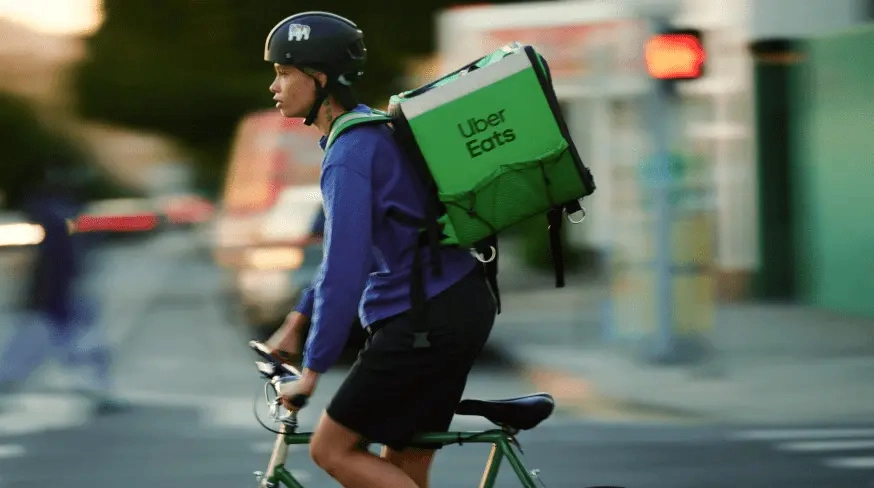
DoorDash is the largest food delivery platform in the US, with 60.7% of national delivery spend at the end of 2024 and the widest courier network, strong in suburbs and mid-size towns as well as big cities.
Advantages:
- Reach and volume: the biggest US user base and DashPass subscriber pool
- Transparent pricing: plans and commissions are published up front
- No hidden fixed costs: its pricing page states "no activation fees, subscription fees, software fees, or cancellation fees"
- Commission-free direct orders: DoorDash Storefront lets you take orders on your own site at 0% commission
- Its own white-label courier service (DoorDash Drive) for orders you take yourself
Drawbacks:
- High top tier: the Premier plan is 30% per delivery order
- Tough competition: you sit alongside national chains
- Optional tablet: $6 per week after a free trial (you can use your own device instead)
👉 Commission: 15% (Basic), 25% (Plus) or 30% (Premier) on delivery, and 6% on pickup across all plans. Free trial of 7 days on Basic, 30 days on Plus and Premier.
Ideal profile: US restaurants that want maximum order volume and national reach, from quick-service to full-service, especially outside the very centre of major metros.
Register your restaurant on DoorDash
2. Uber Eats: one app for the US and the UK
Uber Eats is the platform that spans both sides of the Atlantic. It is the number two in the US (26.1% of spend at the end of 2024) and a major player in the UK, so a single operating playbook works across your markets. It is backed by huge marketing budgets and cross-promotes with the wider Uber and Uber One ecosystem.
Advantages:
- US and UK presence: run one process across both markets
- Large user base in major cities, plus Uber One subscriber reach
- Uber Direct: a white-label courier service for your own direct orders
- In-app advertising to boost placement
Drawbacks:
- 30% top tier on the Premium plan
- Uber One surcharge: the Plus plan adds a 5% surcharge on orders from Uber One members
- Activation fee: an onboarding fee exists (welcome kit, tablet, software, photo shoot), quoted on request rather than published
👉 Commission: 20% (Lite), 25% (Plus, plus 5% on Uber One member orders) or 30% (Premium) on delivery. Pickup is 10%, reduced to 7% when your in-app pickup prices match your in-store prices.
Ideal profile: restaurants operating in both the US and the UK, or any city-centre venue where Uber Eats has a dense user base.
Register your restaurant on Uber Eats (US). In the UK, Uber Eats has its own local partner sign-up.
3. Grubhub: the Amazon Prime angle in the US
Grubhub is a US challenger, strongest on the East Coast and around college campuses. It has been owned by Wonder Group since early 2025, and its standout asset is the Amazon Prime partnership: Prime members get Grubhub+ free, with a $0 delivery fee and lower service fees on eligible orders.
Advantages:
- Amazon Prime reach: free Grubhub+ for Prime members drives repeat orders
- Lower headline tiers: the marketing commission starts at 5%
- Campus dining presence through its student network
Drawbacks:
- The headline rate is marketing only: when Grubhub handles delivery it adds a commission from 10%, plus payment processing of 3.05% and 30 cents per order, so the total often lands in the same 25% to 30% zone as its rivals
- Smaller national share: 6.3% of US spend at the end of 2024
- US only: no UK presence
👉 Commission: marketing commission of 5% (Basic), 15% (Plus) or 20% (All Access), plus a delivery commission from 10% if Grubhub delivers, plus 3.05% and 30 cents processing per prepaid order.
Ideal profile: US restaurants on the East Coast or near campuses, and anyone who wants to reach the large base of Amazon Prime members.
Register your restaurant on Grubhub
4. Deliveroo: the premium UK and European player
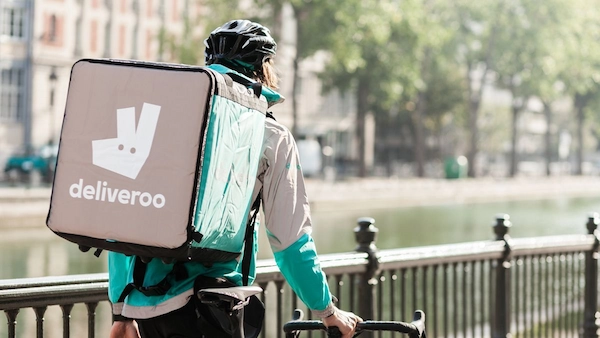
Deliveroo is a UK and European heavyweight, also present in Ireland, France, Italy and the UAE, with a premium, curated positioning. It was acquired by DoorDash in a deal that completed on 2 October 2025, but it keeps operating under its own brand.
Advantages:
- Strong in UK cities: a loyal, quality-focused urban customer base
- Premium image: a more curated restaurant selection than mass-market apps
- Deliveroo Plus loyalty programme for repeat orders
- Editions ghost-kitchen sites in some cities
Drawbacks:
- No published rate: commission is negotiated per contract and location
- VAT on top: UK VAT at 20% applies on top of the commission
- City-concentrated: thinner coverage outside urban areas
👉 Commission: Deliveroo does not publish a single figure. Independent restaurants are typically reported paying around 25% to 30% plus VAT, negotiated by location and volume.
Ideal profile: UK and European restaurants, especially quality-led or premium concepts in city centres.
Register your restaurant on Deliveroo
5. Just Eat: wide UK coverage and lower self-delivery fees
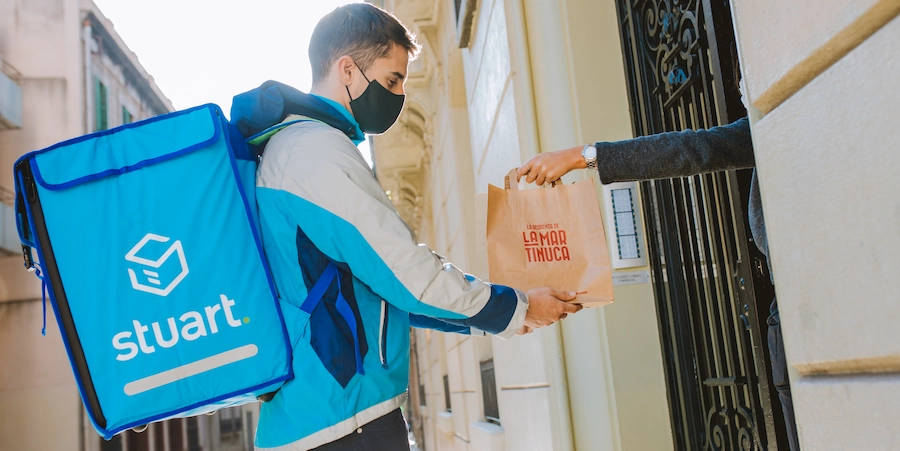
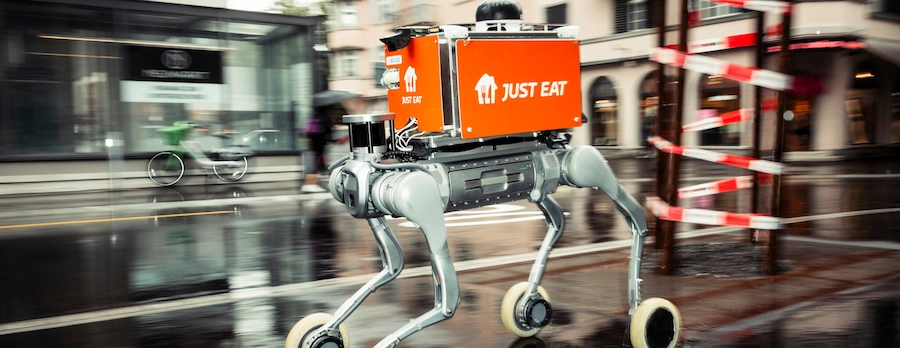
Just Eat is one of the most established ordering marketplaces in the UK and Europe, part of Just Eat Takeaway. Its strengths are broad geographic coverage, including smaller towns, and the option to deliver orders with your own drivers, historically the lower-fee route.
Advantages:
- Wide coverage: present well beyond the biggest cities
- Self-delivery option: use your own drivers and pay a lower commission
- Marketplace visibility without needing the platform's couriers
Drawbacks:
- No official rate: pricing is negotiated, not published
- VAT on top: applies as with every UK marketplace
- Less premium image than Deliveroo in city centres
👉 Commission: not officially published. It is commonly cited at around 14% plus VAT when you deliver orders yourself, rising toward 30% plus VAT when Just Eat handles delivery. Sign up through the restaurant partner page below, not "Just Eat for Business", which is a separate office-catering service.
Ideal profile: UK restaurants outside prime city centres, and any venue with its own drivers that wants marketplace visibility at a lower rate.
Register your restaurant on Just Eat
Two ways to pay less than a marketplace
Beyond the big apps, two routes keep more of each order in your till:
White-label delivery: Uber Direct and DoorDash Drive let you use the same courier networks for orders that come through your own website or phone, with a flat per-delivery fee and no marketplace commission. You keep the customer relationship and the data.
Commission-free direct ordering: ChowNow charges a flat monthly subscription (reported from around $249 per month) with no per-order commission, and DoorDash Storefront takes 0% on orders from your own site. For pizzerias, Slice charges a small flat fee per order (about $2.25, waived on orders of $10 or less) instead of a percentage. These channels work best once you already have some direct demand to capture.
Why use a delivery platform for your restaurant
An essential digital storefront
Delivery apps act as a virtual storefront, putting you exactly where customers are already searching for food. With millions of active users, they offer exposure that is hard to match on your own, even with a well-optimised website.
4 concrete benefits
Immediate visibility: the moment you list, you tap into the app's user base and marketing. DoorDash and Uber Eats spend on advertising at a scale no independent restaurant can match.
New customer acquisition: you reach people who would never have walked past your door.
Simplified logistics: automated order management from receipt to delivery cuts phone time and mistakes.
Time savings: no juggling a phone line at peak hours; the interface handles several orders at once.
A coherent omnichannel strategy
Adding delivery means running dine-in, takeaway and delivery together. That diversification makes you less exposed to a bad-weather night or a quiet dining room, and it maximises your sales potential.
The hidden costs and pitfalls to watch for
Commissions that weigh heavily
The economics are simple: marketplace commissions are high. Expect 15% to 30% of the value of every delivery order, depending on the platform and plan.
👉 In concrete terms, on a $30 order at a 25% commission, you pay the platform $7.50 before you have covered a single production cost (ingredients, packaging, overheads).
The extra fees people forget
- Onboarding: DoorDash charges no activation fee; Uber Eats does have one (welcome kit, tablet, software, photo shoot), quoted on request.
- Payment processing: Grubhub, for example, adds 3.05% and 30 cents per prepaid order on top of its commission.
- Equipment: a tablet is often optional (DoorDash charges $6 per week for one after the trial), and you can usually use your own device.
- Advertising: to climb the in-app ranking, you will often be pushed toward paid placements.
Dependence on algorithms
Your visibility depends on the app's ranking system, which favours restaurants with a high satisfaction rate, fast and reliable service, a high order count and good reviews. Without early visibility you get few orders, which pushes you down further: a vicious circle new listings have to break.
Payment timelines and cash flow
Apps do not pay out instantly. Weekly payouts are standard (some offer faster options for a fee). For a restaurant with tight cash flow, that lag matters, especially early on.
How to calculate your real profitability
Before you commit, run this for every dish:
- Selling price on the app minus commission equals net amount received
- Net amount received minus ingredient cost minus packaging minus share of overheads equals net margin
👉 If that margin is thinner than your dine-in service, you either raise your app prices (at the risk of losing competitiveness) or accept lower unit margins and bet on volume.
How to choose the right platform for your type of restaurant
Fast food and quick-service
If you serve burgers, pizza, sushi or other quick meals, lead with DoorDash and Uber Eats in the US, or Uber Eats and Deliveroo in the UK. Their volume usually offsets the high commission.
Example: an artisan burger spot in downtown Chicago will likely pull more orders on DoorDash and Uber Eats, thanks to their massive user base, even at a 30% top tier.
Neighbourhood and traditional restaurants
For traditional or family cuisine, Grubhub can work well in East Coast US markets, and Just Eat is a strong fit in UK towns, particularly if you use your own drivers to unlock its lower self-delivery rate.
Example: a family trattoria in a Leeds suburb with its own driver may keep more margin on Just Eat than on a 30% marketplace tier.
Ghost kitchens
If you run a delivery-only kitchen, go multi-app. In the US, combine DoorDash (volume), Uber Eats (reach) and Grubhub (Prime members). In the UK, combine Uber Eats, Deliveroo and Just Eat to capture every segment and smooth out demand.
Fine dining
For an upmarket venue, delivery raises real challenges around quality and presentation. Deliveroo is often the best marketplace fit in the UK thanks to its premium base. You can also keep full control with direct ordering plus a white-label courier (Uber Direct or DoorDash Drive).
👉 Tip: adapt your menu for delivery. Some dishes do not travel well; a smaller, optimised menu beats disappointing customers.
How to negotiate your terms with the platforms

What you can and cannot move
The US marketplace tiers (Basic, Plus, Premier and their equivalents) are published and mostly fixed, so haggling the headline percentage rarely works. Your real levers are different:
Pick the right plan: a higher tier buys more visibility, but only take it if the extra orders cover the extra points of commission.
Use cheaper channels: in-app pickup runs 6% to 10%, and direct ordering (DoorDash Storefront, ChowNow) charges no per-order commission.
Advertising credits and onboarding: these are more open to discussion than the core rate, especially when you join.
In the UK, Deliveroo and Just Eat set rates by contract, location and volume, so the percentage itself is genuinely negotiable, particularly with strong order volume.
Contract length: avoid long lock-ins until you have confirmed the channel is profitable.
Best practices
- Compare in parallel: evaluating several apps at once strengthens your hand.
- Highlight your strengths: an excellent reputation, glowing reviews or an original concept are real arguments.
- Test before you scale: run a two to three month trial before betting your operation on any single app.
How to improve your visibility on the platforms
Optimise your visuals and descriptions
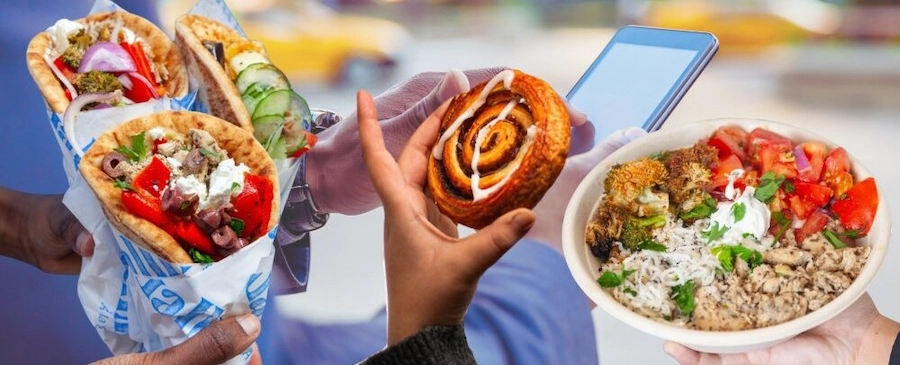
Customers order with their eyes. Your photos are your best salesperson. Invest in a proper shoot or, at minimum: bright natural light, careful styling, generous plating and visual consistency across dishes. Descriptions should be clear and specific, listing key ingredients and allergens.
Maintain a high satisfaction level
The apps favour restaurants with:
- A high rating: aim for at least 4.5 out of 5
- Prep times you hit: announce a realistic time and honour it
- Few cancellations: every declined order hurts your ranking
Adjust your hours on the app to match real capacity, and pause the app during a dining-room rush rather than falling behind.
Always respond to reviews
Replying to every review, positive and negative, signals that you are listening and lifts your image. The same rating and review signals travel across the apps and your Google profile, so a review-collection routine feeds both at once. Tools like a prize game or a QR code in store make it easy to gather more 5-star Google reviews and strengthen the reputation the apps reward.
Use promotions wisely
Target quiet time slots, test different offers ("free delivery over $25", a discounted first order), avoid permanent promotions that erode your margin, and favour offers that lift the average order value rather than flat discounts.
Alternatives to marketplace delivery
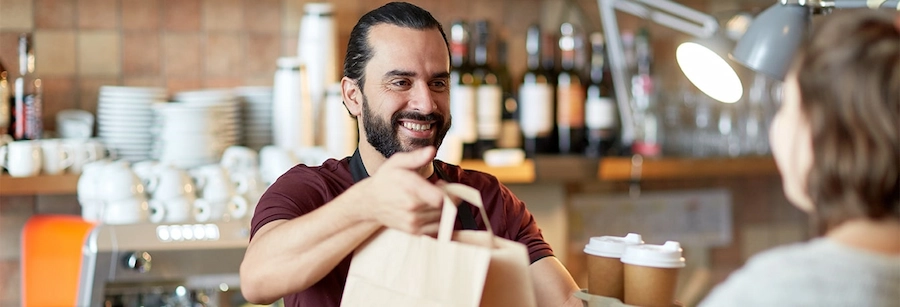
Take orders directly and keep the commission
Direct ordering plus a white-label courier is the highest-margin route:
- No marketplace commission: DoorDash Storefront and ChowNow charge 0% per order; Uber Direct and DoorDash Drive charge a flat per-delivery fee instead of a percentage
- Ownership of the relationship: you keep your customer data and can build loyalty directly
- Stronger brand: the ordering experience stays yours
The trade-off is that you do the marketing to drive that direct demand, since these channels do not hand you a built-in audience the way the marketplaces do. On the tooling side, our comparison of restaurant management software covers point of sale, online ordering and delivery.
Launch a click and collect service
Order online, pick up in store: zero delivery cost, zero marketplace commission, simple logistics. You can offer it through your ordering tool or directly from your Google Business Profile.
Comparing ROI: marketplace vs direct
A simplified monthly picture:
Marketplace scenario:
- Delivery revenue: $10,000
- Average 25% commission: minus $2,500
- Net before overheads: $7,500
Direct-ordering scenario:
- Direct revenue: $8,000 (lower reach at first)
- White-label delivery, flat fees: minus $900
- Ordering subscription: minus $250
- Net before overheads: $6,850
In this example the marketplace wins on volume, for now. But as you grow direct demand toward $10,000, the direct channel pulls clearly ahead, because you are no longer giving away a quarter of every order.
The hybrid model: the best of both worlds
Most successful operators run both: they stay on the apps for reach, and build their own channel to raise margins over time. In practice, you use DoorDash, Uber Eats and their UK equivalents to acquire customers, then gradually nudge repeat customers toward direct ordering. Careful: some contracts restrict soliciting marketplace customers for direct orders, so check the clauses before you print that flyer.
Conclusion: the best food delivery platforms
DoorDash, Uber Eats, Grubhub, Deliveroo and Just Eat each earn their place depending on your market, your type of business and your strategy. But using them takes real thought: commissions of 15% to 30% weigh on every order, and leaning too hard on any single app weakens your position.
The goal is the right balance between visibility, volume and profitability. A US quick-service spot will lead with DoorDash and Uber Eats; a UK neighbourhood restaurant with its own drivers may do better on Just Eat; a ghost kitchen plays every app at once. And whatever mix you choose, the rating that decides your ranking is worth protecting.
👉 Book an Up Review demo to boost the Google reviews that lift your visibility on the apps and on Maps.