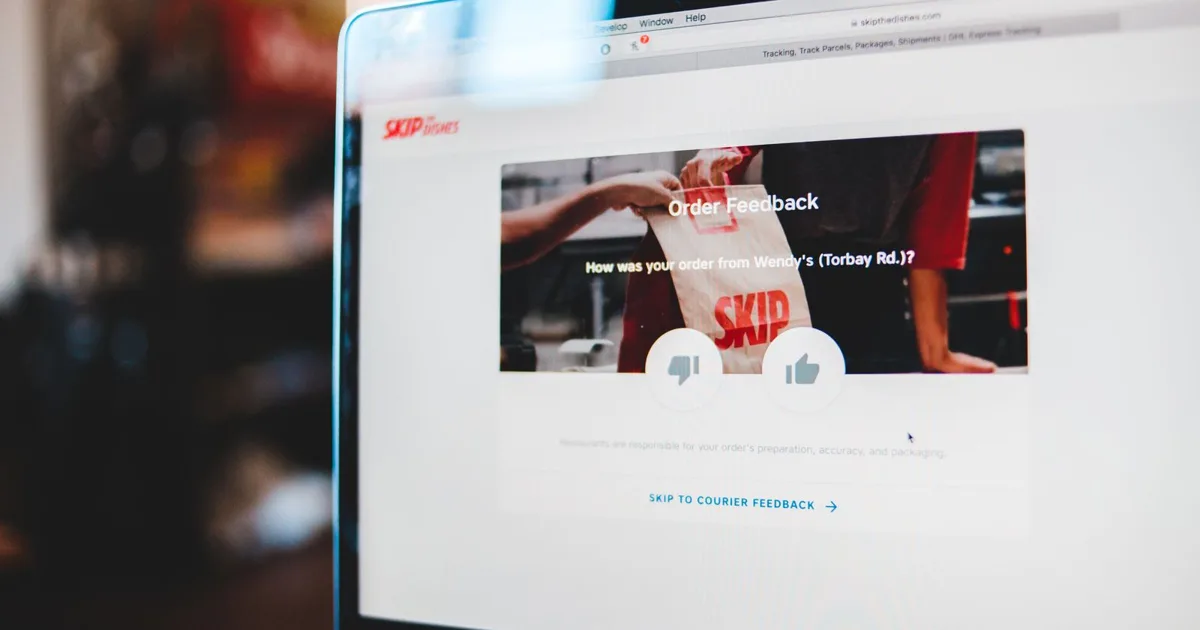
Not sure how to manage your restaurant's online reputation and attract more customers?
Your restaurant's online image depends heavily on the reviews your customers leave. Our dedicated guide to Google reviews for restaurants breaks down how to collect them and turn them into customers.
According to BrightLocal, up to 98% of consumers check reviews before booking with a business.
A simple jump from 3 to 4 stars can boost your revenue by 5 to 9%!
Our client Quick saw the average rating across its Avignon and Nimes restaurants climb from 2.3 to 4 out of 5 after putting review collection on autopilot with Up Review.
Why is your restaurant's online reputation decisive?
Online reputation, or digital reputation, is the image your business projects on the internet. It rests on three elements: customer reviews left on specialized platforms (Google, TripAdvisor, TheFork), social engagement (interactions and mentions on Facebook, Instagram, TikTok), and user-generated content created by your customers or your team (photos, videos, posts).
Unlike traditional word of mouth, this reputation is measurable, permanent, and directly affects your bookings:
63.6% of consumers check Google before visiting a business (ReviewTrackers, 2022);
93% of consumers read reviews before booking (Qualtrics, 2025);
an unanswered negative review can put off up to 70% of potential customers.
Every review therefore counts twice: it influences the customer who wrote it and everyone who reads it afterward.
Where to monitor your online reputation on the internet?
Review platforms you cannot ignore
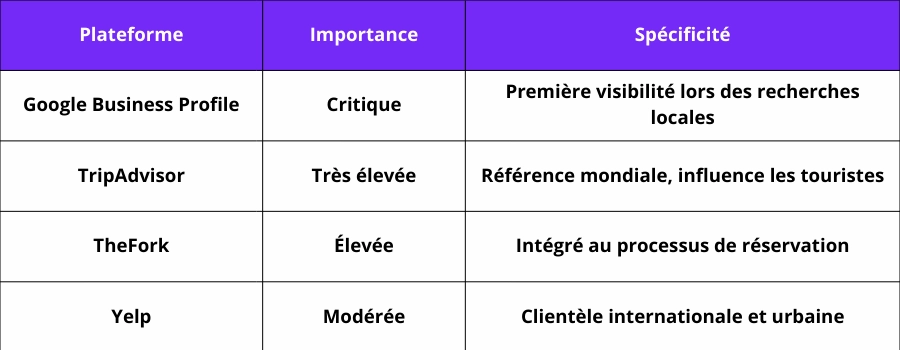
👉 Google is the top platform: 63.6% of consumers check Google reviews before any visit, and 73% of online reviews are posted there (ReviewTrackers, 2022).
TripAdvisor remains the global reference, especially among tourists, while TheFork carries a lot of weight for bookings in Europe.
Yelp, more of a niche player, carries influence with an international urban clientele.
Social media to watch
Every post, share, or mention on social media can affect your professional reputation!
Facebook: business pages, local groups, events where happy or unhappy customers speak up.
Instagram: stories, tagged posts, geo-targeted hashtags that shape your brand image.
TikTok: viral videos, food challenges that can spark a buzz.
LinkedIn: professional reviews, company events for your professional reputation.
Specialized guides and media
Mentions in food guides (Gault & Millau, Michelin, Petit Futé) and blogger articles also contribute to your overall reputation on the web.
Once you've mapped out what to monitor, start with the platform that carries the most weight: your Google Business Profile.
Google Business Profile: your main storefront
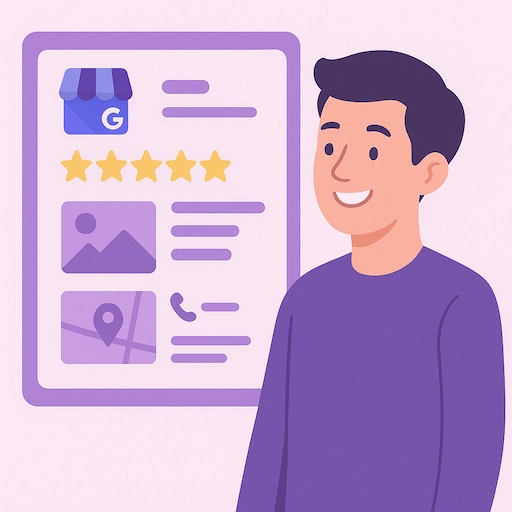
Before they even read a review, your customers find your Google Business Profile. Incomplete or poorly presented information can cost you a booking in seconds. Optimizing this profile is the first step toward strengthening your restaurant's online reputation.
Google Business Profile, what is it?
Google Business Profile is a free service offered by Google that lets businesses, including restaurants, create and manage an online listing.
This listing shows essential information: business name, address, phone number, opening hours, website, photos, customer reviews, and booking options.
It is the first point of contact with your potential customers!
A well-optimized Google profile lets you:
appear in the Local Pack (the top 3 results);
get featured on Google Maps;
increase the number of clicks to your website;
receive more direct calls from your listing.
Mini-guide to optimizing your Google Business Profile
Update your hours in real time.
Make sure your contact details are accurate.
Write a clear description with natural keywords.
Choose a relevant primary category and secondary categories.
Add at least 15 high-definition photos.
Regularly upload photos of your dishes, your chef, and your team.
Show off your dining room's atmosphere with authentic visuals.
Photograph your menus so they are easy to read.
Refresh your images every month.
Publish regular posts (promotions, events, news).
Fill in the Questions & Answers section to address doubts upfront.
Enable direct booking from your listing.
Offer online ordering if possible.
👉 Optimize your Google Business Profile in 15 steps.
No reviews, no credibility, and your prospects choose your competitors instead. The solution? Build review collection into your daily routine to earn a strong, lasting reputation.
How to get (a lot) more customer reviews?
1. The 2 direct outreach techniques
Face to face
Ask for a review right at the end of the meal, while the customer is still happy with their experience.
Hand over a card with a QR code linking to your online review profiles.
Offer a coffee or a digestif to thank them for their time, always respecting platform rules.
Through digital communication
Send a personalized follow-up email after the visit to ask for a review.
Schedule a thank-you SMS with a direct link to your review pages.
Regularly include a review prompt in your newsletter.
2. The 3 modern outreach techniques
QR codes
Send your customers to the most relevant review platform with a QR code that is simple to scan, offering a fast, mobile-friendly path.
The loyalty program
Reward customers who share a review with bonus points, exclusive discounts, or VIP status that turns them into ambassadors.
Influencer collaborations
Team up with local micro-influencers, run Instagram events with dedicated hashtags, and invite food bloggers to try your dishes.
👉 The 15 best tips to get more Google reviews.
Customers do not just judge your food, they also judge how you engage with them online. A thoughtful reply can turn criticism into proof of professionalism, and a compliment into lasting loyalty.
Responding to positive and negative reviews

How to respond to positive reviews
Our recommended structure, simple and effective:
Give a personalized thank you (avoid copy-paste replies: be attentive and creative).
Mention a specific detail from the review to show you actually read it.
Invite the customer to come back: they should feel welcome and know their positive experience can happen again.
Example: "Thank you, Sarah, for this wonderful review! We are delighted our mushroom risotto won you over. We would love to welcome you back to try our new seasonal menu!"
👉 Guide: How to respond to Google reviews, with 40+ examples.
How to respond to negative reviews?
For the perfect response, follow the 4 golden rules:
Speed: reply within 24 hours at most.
Empathy: acknowledge the unhappy customer's disappointment.
Accountability: own the issue without over-justifying.
Solution: offer a concrete course of action.
Professional response template: "Hello [Name], please accept our apologies for this disappointing experience. Your feedback matters to us and we take your comments very seriously. We would like to talk with you to understand what happened and improve. Could you contact us at [phone number]? We would be glad to welcome you back to see the improvements we have made."
Mistakes to avoid at all costs!
Impersonal messages that hurt your image.
An aggressive tone toward critics.
Excessive justifications that can tarnish your reputation.
Silence in the face of criticism, which undermines your credibility.
👉 Automate your Google review replies with Up Review.
Showcasing your best customer reviews
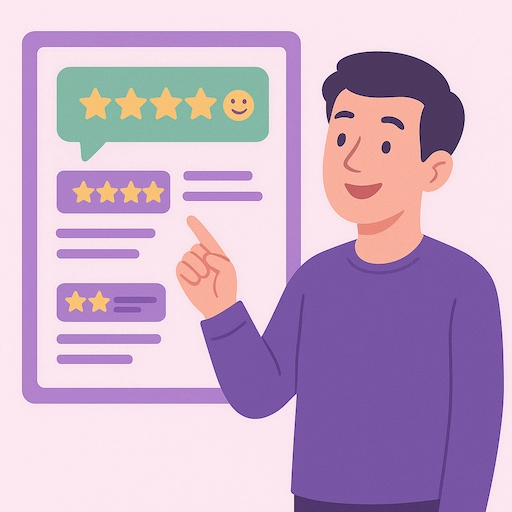
Every positive review is free marketing. By featuring them across your channels (website, social media, dining room), you reassure prospects and increase bookings!
Where to display these reviews
On your website
Create a dedicated testimonials page featuring your 20 best reviews.
Display reviews in automatic rotation on the homepage.
Add direct links to your full profiles (Google, TripAdvisor, TheFork).
Naturally weave quotes into your dish descriptions.
Add call-out blocks on your booking pages.
Show your up-to-date overall rating in the footer.
On your social media
Repost your reviews as Instagram stories with a design consistent with your brand.
Create personalized thank-you videos for more engagement.
Set up a permanent "Customer reviews" highlight on your profile.
Publish your best customer feedback on Facebook every month.
Use a carousel format to showcase several testimonials at once.
Share photos posted by your customers to build an active community.
In your restaurant
Display your best customer quotes somewhere visible.
Set up QR codes linking to your full profiles to make browsing easy.
Add a digital guestbook on a tablet for a modern touch.
Key metrics for tracking your online reputation
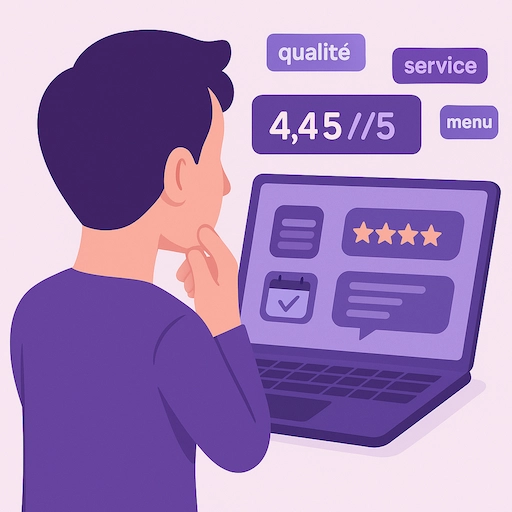
4 essential metrics
Average rating: between 4.0 and 4.7/5; beyond that, the rating is seen as less credible (Medill Spiegel Research Center, 2017).
Review volume: at least 50 verified reviews to be seen as credible (BrightLocal).
Review freshness: 73% trust reviews less than a month old, 27% trust those less than two weeks old (WiserNotify, 2024).
Reading reviews: 93% of consumers read reviews before booking (Qualtrics, 2025).
Semantic analysis of customer feedback
👉 Reviews are not just star ratings!
88% of consumers say they trust written reviews more than a simple star rating (Backlinko, 2024).
Analyzing recurring words in your customer feedback highlights:
your strengths,
areas for improvement,
emerging consumption trends.
Tracking these metrics by hand quickly becomes time-consuming: that is exactly what dedicated tools are for.
Which tools help manage a restaurant's online reputation?
Managing every review by hand quickly becomes a headache, especially once you are present on Google, TripAdvisor, TheFork, and social media. Online reputation tools let you bring everything together, save time, and stay in control of your online image.
Which features are essential in an online reputation tool?
Before choosing a solution, make sure it includes at least these restaurant-specific features:
Centralizing all your reviews in a single dashboard.
Automated review invitations, sent right after your customers' meal.
Real-time moderation alerts for every new review received.
Detailed reporting and analytics to get recommendations and improve your reputation.
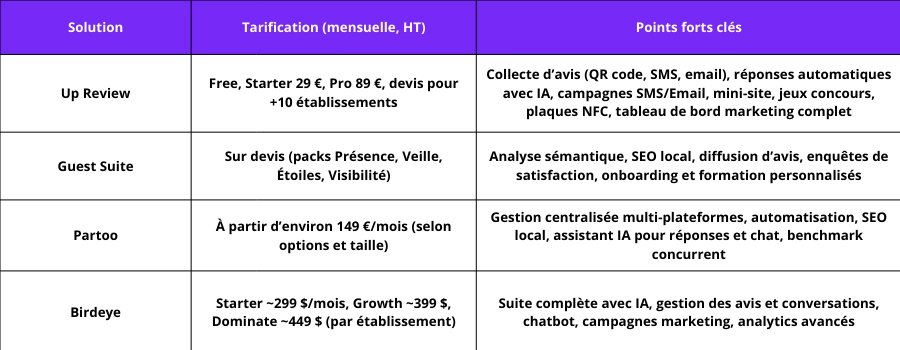
The best online reputation management tools for your restaurant
Several solutions exist on the market, some general-purpose and others built specifically for restaurants. What matters is choosing a tool that fits your size, goals, and resources. For a restaurant, Up Review checks all four boxes mentioned above: centralized reviews, automated post-meal invitations, real-time alerts, and AI-assisted replies.
Action plan for handling a PR crisis
A viral complaint or a negative video can shake up any business. With a clear strategy, you can limit the impact of a PR crisis and even come out of it stronger.
Phase 1: Immediate reaction (0 to 2 hours)
When a crisis breaks out, the first step is an immediate reaction. Quickly assess how serious the situation is, gather your team, and inform all staff. This internal organization prevents panic and sets up a coherent response.
Phase 2: Strategic response (2 to 24 hours)
The strategic response means publishing an official statement that takes responsibility without stirring up further controversy. At the same time, put concrete corrective actions in place and reach out directly to the customers involved.
Phase 3: Reputation recovery (1 to 4 weeks)
Rebuilding your reputation takes time. It is important to show the improvements you have made, generate new positive reviews, and communicate regularly about your efforts.
Examples of a crisis well handled
Restaurants that successfully come out of a crisis often share four traits:
Total transparency about mistakes
Quick responsiveness
Goodwill gestures to make up for it.
The ability to learn lessons and avoid repeating the same mistakes.
Dealing with unfair competition and fake reviews
The threat of fake reviews is real: 75% of consumers worry about fake reviews, and 83% avoid a business suspected of posting them (Backlinko, 2024).
Faced with a defamatory or dishonest review, three strategies stand out:
Flagging it with the platform.
A public, diplomatic response.
Providing authentic evidence (receipts, photos, testimonials).
In serious cases, you can invoke the right to be forgotten or call in a specialized agency.
Thinking about buying Google reviews? Before making that risky mistake, find out why buying Google reviews is a very bad idea!
25 actions to improve your restaurant's online reputation
Beyond the big principles, it is the small, regular actions that make the difference. Here is a series of concrete best practices to boost your online reputation day after day.
Place a QR code on every table pointing to your review profiles.
Send an automatic SMS two hours after the meal to ask for feedback.
Thank customers with a follow-up email containing a link to your reviews.
Hand out a connected business card linking to your social media.
Offer a coffee or a simple gesture to encourage a review, while respecting platform rules.
Publish new photos every month to keep your profile appealing.
Reply to every review in under 6 hours to show your responsiveness.
Update your hours, menus, and contact details every week.
Publish two posts a week on Google Business Profile.
Use geo-targeted keywords in your descriptions for local SEO.
Monitor your reviews every day with a listening tool.
Train your team every month on why online reputation matters.
Prepare response templates to save time on reviews.
Regularly analyze the words and themes that come up in your customer reviews.
Compare your results with those of your direct competitors.
Send a newsletter highlighting your best reviews to your loyal customers.
Share behind-the-scenes moments from your restaurant in Instagram stories.
Invite local micro-influencers to try your dishes.
Use geo-targeted hashtags to reach a local customer base.
Repost your customers' photos to drive more engagement.
Send an automatic message after a confirmed booking.
Organize themed events that encourage customers to share their experience.
Build partnerships with local businesses to increase visibility.
Respond to customers across every available channel: email, social media, SMS.
Create a VIP program to reward and build loyalty among your ambassador customers.
Conclusion: managing your restaurant's online reputation
In short, mastering your restaurant's online reputation is essential for attracting and retaining customers. With the right habits and the right tools, every review becomes an opportunity for growth!
👉 Ready to take back control of your image? Book an Up Review demo or sign up for free