

Want to know how to collect customer reviews, and how to get even more of them?
Here is the first thing to understand: collecting customer reviews is not "a nice marketing extra." It is a key driver of your visibility, your reputation and your conversions.
👉 According to a BrightLocal study, 97% of consumers read online reviews before choosing a local business, which makes reviews a decisive factor in the buying decision.
Our client Maison Ravenel went from a 4.1 to a 4.6 average rating after collecting more than 6,000 new Google reviews with Up Review.
The problem is that many businesses ask for reviews at random, on a single channel, or with clumsy messages.
In this article, you will learn a clear 6-step method for collecting customer reviews: what it really means, and how to put those reviews to work.
6 steps to collect more customer reviews
| Step | Goal | Concrete action |
|---|---|---|
| 1. Set your goal | Know why you want reviews | Average rating, volume, detailed reviews or conversion: set a measurable target |
| 2. Choose the right moment | Ask neither too early nor too late | Right after the experience, on day 1 to day 3, or after resolving an issue |
| 3. Make it easy to leave a review | One click, one action | Direct link, QR code to scan or NFC plate |
| 4. Write a short message | Grab attention in a few seconds | Clear, human message; polish the subject line and first sentence for emails |
| 5. Follow up only once | Remind without nagging | One follow-up 2 to 3 days later, done properly |
| 6. Put the reviews you collect to work | Turn reviews into a growth lever | Reply, analyse with AI, display reviews on your site |
Why collecting customer reviews boosts your visibility?
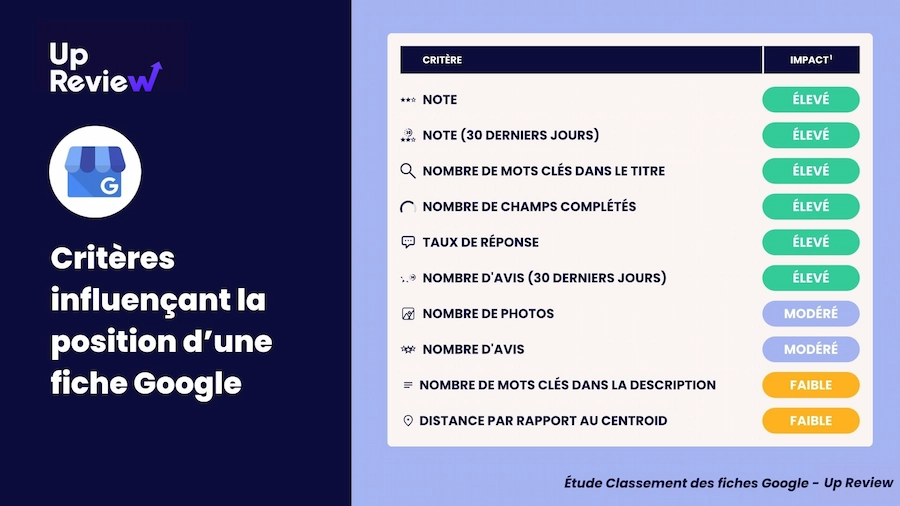
A customer review reassures people far more than a brand promise ever could. It provides concrete social proof. Online, that social proof directly shapes the decision, the trust and the willingness of potential customers to get in touch. It also plays a major role in Google's eyes: numerous, recent and positive reviews strengthen a business's credibility and improve its visibility in local search results.
Collecting customer reviews works on three concrete levels:
Trust: your future customers want to know whether you keep your promises, and they need to trust you before buying your services.
Reputation: your image is built by others, by what your customers remember about you.
Search ranking: search engines love signals of quality, recency and engagement. Positive, recent customer reviews that include relevant keywords carry real weight with Google and lift your ranking.
And here is a simple reality: without asking, you will never have enough reviews. Spontaneous reviews do happen, but they are rare. Often, it is unhappy customers who think of leaving a review first.
👉 Most satisfied customers simply do not think about it, because for them a good experience feels normal, unless you clearly stand out from the crowd.
Example: Coca-Cola is a hugely well-known, well-regarded brand, yet very few people think to leave a review about it, on its site or anywhere else. But serve someone a flat or flavourless drink at a restaurant, and they will leave a review or make their own comment, taking the time to flag it.
What is real customer review collection?

A review is not just a star rating. It is public or private feedback on an experience. It can be short (a star rating plus one word) or detailed (what happened, why it went well, what could be improved).
Customer review collection covers the whole process of:
asking for a review at the right moment,
making it easy to leave a review,
gathering authentic reviews,
managing what gets published and what needs to be handled internally.
You will also hear this called gathering reviews or collecting feedback. Whatever term you use, the idea is the same: move from a random, ad hoc approach to a regular system. Encourage people to leave a review, simplify the customer's path, aim for volume without spending hours on it, and get the best possible quality of review (rich detail, honest and thorough feedback).
Why customer reviews matter: quality, recency and quantity
According to Whitespark's study, the number of Google reviews, their average rating and their recency are among the most important factors for ranking in Google's local results.
👉 The goal is not to stack up stars, even though a higher average rating never hurts. The goal is to earn reviews that are credible, useful and consistent with what you actually do: positive, of course, but above all detailed, reasonably long and as genuine as possible.
A good balance rests on 3 criteria:
1. Quality
A detailed review helps far more than a one-word "great." Detailed reviews with real information, specific references to the service provided, and an honest tone are worth far more, both to Google and to readers. One high-quality review is worth more than 20 generic 5-star reviews, and Google knows it: it gives these reviews more weight (even more so if they include a video or photos).
2. Recency
Recent reviews carry more weight than reviews from two years ago. First, for Google, recency is one of the local SEO ranking factors. Fresh reviews signal an active Google Business Profile and a business that is genuinely alive. For customers too, a review from 2 years ago no longer feels current. It is common sense, and it matters.
3. Quantity
Businesses with a large number of Google reviews get up to 54% more clicks than those with few reviews, which shows that review volume directly shapes trust and decision-making. That is an average, so a 5/5 rating based on 3 reviews barely moves the needle. Customers understand there are not enough reviews to make that rating meaningful. A high rating becomes genuinely impactful once it is backed by a large number of reviews, because it becomes representative.
Internet users are growing increasingly wary of dubious comments. That is where verified and guaranteed reviews come in: a trusted third party can strengthen review verification and limit fake reviews. Without getting too technical, remember this: collect reviews poorly, and you raise the risk of extreme comments. Collect them well, and you get authentic, more varied, more natural reviews.
The platforms for getting customer reviews
Many businesses get stuck on one idea: "We do everything on Google."
That is a common mistake. Platforms all matter, but not in the same way, and it depends on your line of business.
Google Business Profile (Google My Business)
If you have a physical location, a trade area or a business address, Google reviews are usually the foundation. Google My Business, now called Google Business Profile, is a must, because your ratings show up directly in search results.
👉 They appear on Google in the local pack, the three businesses Google shows for a given search. On top of that, your business profile can also pull in external reviews from other sites and display them on the profile itself, which makes it even more important.
Example: TripAdvisor and Yellow Pages reviews can also show up on the profile itself.
To go deeper on this specific channel, check out our ultimate guide to getting Google reviews: a complete method, how to calculate your average rating, and the levers specific to your Google profile.
TripAdvisor, TheFork and restaurant-specific platforms
For a restaurant, customers also check reviews on specialised platforms. The goal is to be present in as many relevant places as possible, and especially wherever your target audience actually looks.
If you are not sure where to list your restaurant, check out our article on the 35 platforms to list your restaurant on.
Social media
A Facebook page can capture reviews and comments, and Google can surface it too. Social media and the comments on your pages can also be a great source of honest reviews.
Even when they do not all show up on Google, your visitors do see the comments on your posts, videos and pages on social media, and they pay real attention to them. Google also crawls your social media and picks up what is written there.
Review platforms
A dedicated review platform can help you structure a review-collection strategy, automate it, moderate reviews and fight fake reviews.
Some solutions highlight certified reviews or a trusted third-party verification process, similar to Avis Vérifiés, a leading provider of this kind of solution: a widget or banner displayed on your site that also boosts your credibility and your standing with Google.
👉 Start with 2 channels maximum. You can expand to other platforms later if needed, but in most cases, 1 to 2 is enough.
How to collect customer reviews in 6 steps

Here is a 6-step framework you can apply no matter your industry, to collect as many customer reviews as possible in the simplest, most effective way.
1. Set your goal
Ask yourself a simple question: why do you want customer reviews?
improve your average rating,
increase your number of reviews,
get more detailed reviews,
strengthen your business's reputation,
convert better on your website.
A clear goal keeps you from scattering your efforts and losing motivation when collecting reviews or choosing a tool or platform. It also gives you criteria to work with, and a way to measure the progress of your review collection.
2. Choose the right moments to ask for a review
Timing makes all the difference. Ask too early, and it is risky. Ask too late, and it is forgotten.
3 windows tend to work well:
right after the experience: straight after the service (restaurant, shop, treatment), though this depends on the type of business and does not work for everything,
day 1 to day 3: once the customer has had time to reflect on the experience and use the product or service,
after resolving an issue: if you handled a problem effectively and the customer seems satisfied.
Timing matters a great deal. It also keeps the request from feeling like pressure and makes it easier to collect reviews, because the customer feels it is legitimate to leave a review and understands why you are asking, as long as it is done simply and naturally.
3. Simplify how easy it is to leave a review
The golden rule: one click, one action.
A satisfied customer does not want to go hunting for your Google page. They want a direct link, a QR code to scan, or an NFC Google review plate.
The simpler, clearer, easier and more direct it is, the more reviews you will get. Most people will not search for your business on Google or log in just to leave a review. Make the process as clear and fast as possible so you do not lose them along the way.
4. Write a short, clear, human message
83% of consumers leave a review when a business asks them to simply.
Your request should fit in a few lines. No novel. No lengthy justification.
You get 5 to 10 seconds of a customer's attention before you lose them. It is even harder for emails: the subject line and the first sentence matter most for grabbing attention.
The same goes for social media: your cover photo or thumbnail plays a decisive role.
5. Follow up only once, and do it properly
A follow-up is useful, but it needs to stay light.
One follow-up is usually enough, as long as it is well timed. A follow-up 2 to 3 days later works perfectly.
Maybe the person already saw your request but did not have time, or simply missed it. That reminder shows up and works in your favour.
A follow-up costs you nothing, but keep it light: one well-placed follow-up is enough, and then you stop.
6. Put the reviews you collect to work
Once you have collected reviews, do not let them sit unused. Analyse them, reply to customers, identify your strengths, and work on whatever comes up most often as room for improvement.
Use your reviews as a self-analysis tool to understand trends and how your service is genuinely perceived. You can lean on AI to spot trends, summarise feedback, highlight the positives and flag areas to improve. Negative reviews should never be ignored: they are essential for making progress and adjusting your customer experience.
Displaying reviews on your website is also a strategic lever. It builds trust, improves conversion, and lets you control how reviews are featured and presented. Unlike third-party platforms, your website belongs to you: you choose which reviews to display, how to present them, and how long to keep them up.
Example of verified customer reviews displayed on the website of Lumix Création, a lighting designer and manufacturer based in Montpellier.

How should you phrase your review request?
The most common fear: "I do not want to bother them." Yet if you ask the right way, you are not bothering anyone. The right tone is polite, free of pressure, service-oriented (helping other customers choose) and personalised whenever possible: first name, context of the visit.
No need to reinvent the wheel for exact wording: our dedicated article gathers examples of messages for requesting a Google review, for SMS, email, in person and on a QR code, ready to copy and personalise.
3 mistakes to avoid when collecting customer reviews
Here are the mistakes that wreck your results.
1. Only asking customers "who will leave 5 stars"
It can feel tempting. But you end up creating a review profile that looks too "perfect."
If you only ask your happiest customers, you are optimising for your average rating and not for review volume, even though volume matters just as much, as covered above.
It is better to ask every customer, using a smart filter: for example, a short internal satisfaction survey, then routing customers to the public review only if satisfaction is high (as with the Up Review spin-to-win wheel, which has a built-in negative-feedback filter that decides whether to redirect them or not).
2. Asking too often
If you keep asking the same people without any logic, you wear out your customer base.
It costs you in brand image. Asking too much, following up too much, or displaying requests everywhere at the wrong moment all come across as pushy.
Your request should be present but discreet. Avoid over-soliciting or coming across as needy or cheap.
3. Not responding to customer reviews

Not responding makes you look like you have abandoned your reviews.
Google favours freshness and activity. Showing that you respond demonstrates that you are paying attention.
The same goes for visitors, especially when it comes to negative reviews. Imagine not responding: it is like taking a hit without defending yourself.
Responding to negative reviews is an art, and responding to positive reviews is also an opportunity.
To go further, check out our complete guide on how to respond to customer reviews, with more than 40 concrete examples for every situation.
5 tools for collecting customer reviews in-store

The point of sale is a powerful moment: the customer has just lived the experience. It is the most strategic time to ask for a review, if your business lends itself to it: the experience just happened, and the feedback is still fresh.
So here are 5 simple options to set up in-store for collecting customer reviews:
Spin-to-win prize wheel: the top converter, generating 5x more reviews than a simple request.
NFC plate or card: extremely effective, a single tap and an instant redirect.
QR code at the exit, on the receipt, or on the till slip.
A tablet left on the table during the meal, for example.
A kiosk if you have high foot traffic, at the checkout: very effective.
Warning: never "leave a review" on the customer's behalf. That is the surest way to create dubious comments and fall into risky practices.
Up Review: the best customer review collection tool in 2026

When customer review collection relies solely on staff remembering to ask, or on occasional requests, the results stay weak and inconsistent.
Up Review is a French platform built to automate and simplify customer review collection (mostly on Google), largely through gamification. Instead of asking for a review the traditional way, the platform turns the request into a fun experience.
Up Review's flagship feature is the prize game that boosts your Google reviews, which generates nearly 5x more reviews than a standard request.
It also offers QR codes you can generate on demand, loyalty-focused SMS and email campaigns, and other features designed for local businesses, restaurants and more.
With this solution, businesses get up to 50 to 200 new Google reviews per month and convert up to 1 in 5 customers.
Up Review also lets you centralise all your customer reviews, reply automatically and quickly, save time, and improve your local SEO.