Last updated: 20 July 2026
Your acquisition campaigns are running, but your customers are not coming back?
It is a trap many businesses fall into: pouring every euro into prospecting while letting already-won customers slip away. Yet keeping a customer costs far less than winning a new one, and a loyal customer spends more, more often.
Here is what customer retention actions actually are, why they change the game, and above all, ten concrete levers you can activate right now.

What is a customer retention action?
A customer retention action covers every initiative a business puts in place to build a lasting relationship with its customers and encourage them to come back. Unlike plain customer satisfaction, which depends on product quality, retention is a deliberate effort: you build a bond of trust strong enough that the customer chooses you despite the competition.
There are generally three types of customer loyalty, and a good strategy combines them rather than picking just one.
| Loyalty type | What it relies on | Concrete levers | Strength / limit |
|---|---|---|---|
| Transactional | Rewarding the purchase | Points, discounts, loyalty card, exclusive promotions | Immediate effect, but fragile if a competitor does better |
| Relational | Emotional connection and closeness | Personalised emails, birthday messages, after-sales follow-up, customer service | Stronger, longer-lasting attachment |
| Experiential | Unique, memorable experiences | Private events, brand community, premium content, gamification | Very hard for competitors to copy |
(Some academic models instead speak of behavioural, induced and attitudinal loyalty; in commercial practice, the transactional / relational / experiential trio remains the most workable.)
Why set up customer retention actions?
Because retention is one of the most profitable marketing investments there is. It secures your existing revenue, reduces your dependence on acquisition, and turns your customers into trusted advocates.
1. A direct impact on revenue
According to research by Frederick Reichheld (Bain & Company) published in the Harvard Business Review, increasing your retention rate by just 5% can boost profits by 25% to 95%. Loyal customers buy more often and are less swayed by competitors' promotions.
2. A far less costly acquisition process
The same Harvard Business Review article notes that acquiring a new customer costs 5 to 25 times more than retaining an existing one. Relying on prospecting alone erodes your margins, while retention makes the most of efforts you have already put in.
3. Natural ambassadors
A loyal customer recommends you. According to Nielsen's Global Trust in Advertising study, more than eight consumers out of ten (83%) trust recommendations from people they know more than any advertisement. Word of mouth remains your best acquisition channel.
4. A safeguard against churn
Even satisfied customers leave when there is no follow-up or ongoing connection. Without structured retention actions, a business can lose a significant share of its customer base every year. Nurturing the relationship means plugging the leak before it becomes costly.
The 10 actions for customer retention to implement
There is no need to launch everything at once. Choose the levers that suit your business, test them, measure the results, then scale up what works. Here are ten proven customer retention actions, from the fundamentals to the most differentiating.
1. Launch a digital loyalty programme
The loyalty programme remains the backbone of any retention strategy. In 2026, it needs to be digital and omnichannel: a card in a mobile wallet, points you can build up, real-time tracking. Beyond encouraging repeat purchases, it collects valuable customer data to personalise your follow-ups. According to Statista, a well-run loyalty programme can increase member spending by up to 20%, and Bond Brand Loyalty finds that members spend 67% more on average than non-members.
2. Build tiered rewards
Not all rewards are equal. Structured into tiers, they maximise engagement. A first tier unlocked as soon as someone signs up (a discount, a free coffee) kick-starts the relationship; intermediate tiers reward regular visits; a VIP status or a hard-to-reach "wow" gift leaves a lasting impression. This progression gives customers a concrete reason to keep coming back and building up points.
3. Run private sales and flash sales
Reserved for your loyal customers, private sales and flash sales create a sense of exclusivity and urgency that drives purchases. According to McKinsey & Company, these time-limited events can increase sales volume by 10% to 25% compared with a typical day. They make your best customers feel valued while boosting your revenue.
4. Set up a referral scheme
Referral schemes work on two fronts: they retain the referrer and win a new customer through recommendation. By rewarding both the referrer and the friend they bring in (a discount, credit, a gift), you activate the most credible channel there is: word of mouth. It is one of the best-performing actions for return on investment, because it turns your customers into a sales force.
5. Personalise emails and text messages
Staying present between two purchases is essential. Email and newsletters keep the relationship alive with useful content (tips, behind-the-scenes updates, targeted offers); SMS campaigns, with an open rate close to 98%, remain the most direct channel for a win-back message or a birthday offer. Paired with a marketing automation tool and your CRM, this communication triggers automatically at the right moment: welcome, birthday, or a win-back message for an inactive customer.
6. Showcase customer reviews and listen to the voice of the customer

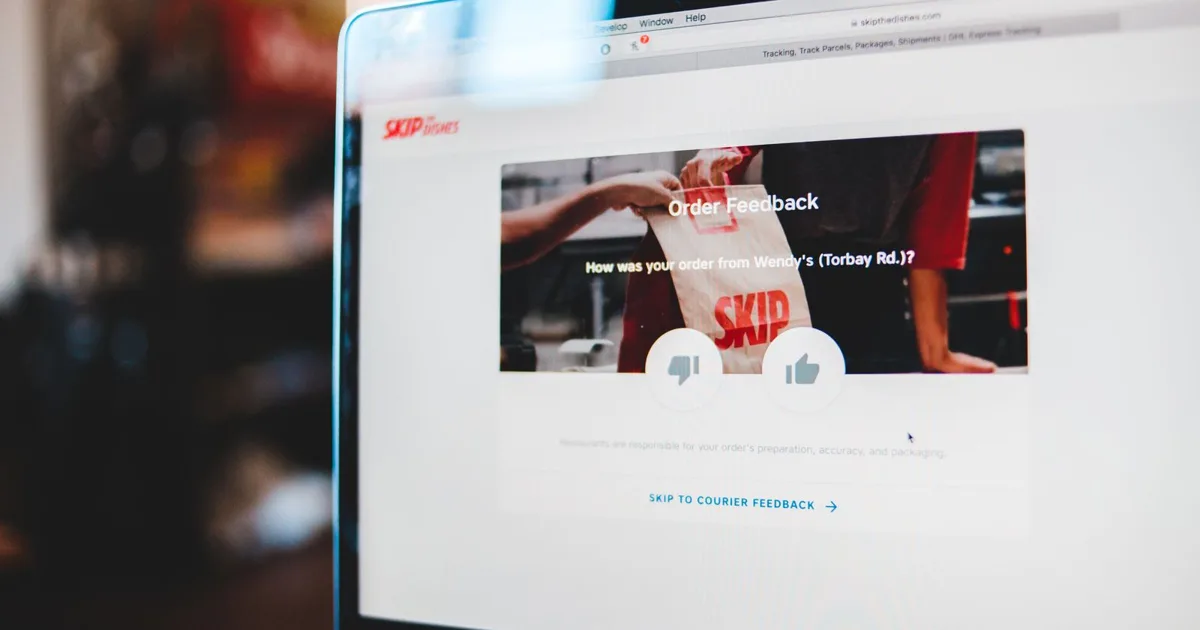
Taking your customers' reviews into account is, in itself, a retention action. When a customer feels heard, their attachment to your brand grows. Systematically ask for reviews, respond to them, including the negative ones, and use that feedback to fix what needs fixing. That is exactly the role of a platform like Up Review, which automates Google review collection in-store and measures customer satisfaction (NPS, satisfaction survey questions). You turn every interaction into an actionable signal: you spot detractors before they leave, and identify your ambassadors so you can call on them.
7. Offer responsive customer service
Fast, personalised customer service is often the number one factor in genuine loyalty. Responding quickly, resolving issues efficiently, anticipating needs: that is what turns a complaint into an opportunity to build trust. Good after-sales support does not just retain customers, it creates ambassadors where a poor experience would have created a detractor.
8. Build a brand community

Building a community creates a powerful sense of belonging. A private social media group, a dedicated discussion thread, themed workshops: give your customers a space to connect and feel valued. An active community strengthens emotional engagement, fuels natural word of mouth, and reduces churn. It is also fertile ground for your future ambassadors.
9. Create prize games and gamification

Gamification energises your customer relationship while collecting data. A prize game, a spin-to-win wheel or a challenge turn a simple visit into a fun, memorable experience. These moments spark engagement, encourage sharing on social media, and give customers one more reason to stay active in your programme.
10. Build strategic partnerships
Teaming up with complementary, non-competing brands (a florist with a chocolate shop, a gym with a nutrition store) enriches your offer at no direct cost. You offer cross-benefits, reach a new audience, and increase the perceived value of your programme. It is one of the smartest, most cost-effective levers for building loyalty.
How to build a customer retention strategy in 5 steps
A single, isolated action gets you little. To last, your retention actions need to fit into a structured, measurable plan. Here is the method.
Step 1: Run a diagnostic
Segment your customer base (occasional, regular, VIP, inactive), analyse purchase frequency and average order value, and pinpoint friction points. You will know exactly where you are starting from.
Step 2: Set measurable goals
Reduce churn, increase customer lifetime value (CLV), boost repeat purchases, encourage referrals. Every goal needs its own indicator.
Step 3: Prioritise your actions
Rather than launching everything, select two or three levers (transactional, relational, experiential) and test them.
Step 4: Deploy the right tools
A CRM to centralise your data, marketing automation to trigger emails and text messages, a reviews and satisfaction platform to listen to your customers, and a wallet to modernise your programme.
Step 5: Measure and adjust
Track your KPIs, listen to feedback, and evolve your rewards to match each customer's lifecycle. Retention is a continuous improvement loop.
Segmentation is the common thread running through this whole plan: an offer that works for a VIP will not work for a dormant customer. Tailoring each message to each segment is how you maximise relevance, and return on investment.
How do you measure the effectiveness of your customer retention actions?
Effectiveness is measured with a handful of precise indicators, tracked over time.
| Indicator (KPI) | What it measures | Why it matters |
|---|---|---|
| Retention rate | Share of customers who buy again over a period | The ultimate test of loyalty |
| Purchase frequency | Number of purchases per customer over the period | Shows whether customers are coming back more often |
| Average order value | Average amount spent per order | Shows whether members are spending more |
| Reward redemption rate | Share of rewards actually used | Measures the programme's real appeal |
| Net Promoter Score (NPS) | How likely customers are to recommend you | A barometer of word of mouth to come |
Taken together, these numbers tell you what is working and what needs adjusting. Good tracking turns retention into a continuous improvement loop rather than a string of random actions.
The tools for retaining your customers
An effective retention strategy rests on four families of tools. The CRM centralises data and enables segmentation. Marketing automation automatically triggers emails and text messages at the right time. Programmes and wallets modernise the loyalty card. And a reviews and satisfaction platform closes the loop by capturing the voice of the customer. Combined well, these tools cover all three dimensions of retention and make your actions repeatable at scale.
Conclusion: customer retention actions
Retention is not optional: it is the condition for profitable, lasting growth. Where acquisition demands costly, ongoing effort, your retention actions deliver a stronger return by turning your existing customers into ambassadors. A well-designed programme, personalised communication, responsive service and active listening to reviews: there is no shortage of levers, as long as they are guided by clear indicators. And since satisfaction is measured before it turns into loyalty, listening to your customers first, through their reviews and satisfaction levels, is often the very first action to put in place.