Your existing customers are your most valuable asset. Yet most marketing budgets are still aimed at acquiring new prospects, when real profitability is built over time with the people who already trust you.
Retaining a customer costs 7 times less on average than acquiring a new one. That figure alone should be enough to put loyalty back at the centre of your commercial strategy.
Yet 73.2% of small business owners still operate without a formal loyalty programme, according to a 2025 SumUp survey of 617 US micro and small business owners. That gap is where the opportunity lies.
What is a customer loyalty strategy?

A customer loyalty strategy is a structured plan of marketing and relationship-building actions designed to extend a customer's lifetime value, increase their purchase frequency and strengthen their attachment to your brand, product or service.
It is not just a points scheme or a loyalty card. It is a comprehensive approach that covers customer service quality, personalised relationships, gathering feedback, and creating a consistent customer experience across every channel.
An effective customer loyalty strategy rests on three complementary dimensions:
- The emotional dimension: building an emotional bond between the customer and the brand. Customers no longer choose on price alone, they choose because they feel understood and valued.
- The rational dimension: demonstrating that your product or service is objectively better or better suited to the customer's needs. The concrete benefits need to be visible and clearly perceived.
- The behavioural dimension: embedding regular purchasing habits through well-calibrated incentive mechanisms.
A loyal customer does not just spend more. They become an ambassador who spontaneously recommends your business to friends and family, generating free organic acquisition in the process.
Why is customer loyalty so profitable?
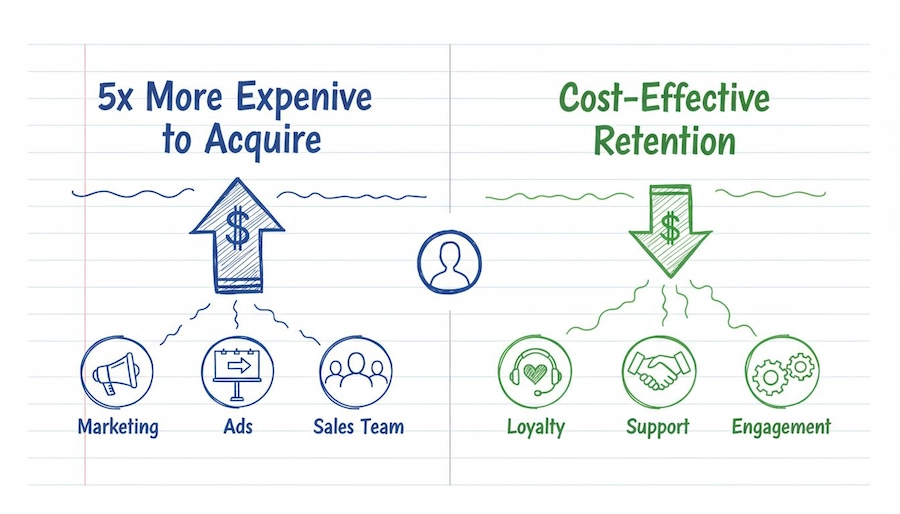
Customer loyalty is one of the most profitable marketing levers, yet it is often under-used in favour of acquisition.
The direct impact on revenue
According to a study by Bain & Company, a 5% increase in customer retention lifts a company's profits by 25 to 95%. This comes from two combined effects: loyal customers buy more often, and they are less price-sensitive, making them more willing to accept a price increase if the perceived value justifies it.
The odds of selling to an existing customer are 60 to 70%, compared with just 5 to 20% for a new prospect, according to data compiled by INVESP. This gap in conversion rates alone explains why investing in the relationship with current customers delivers a better return than piling more budget into acquisition campaigns.
Lower management costs
Acquiring a new customer requires a prospecting, communication and onboarding budget that simply is not needed for a loyal customer. The cost of handling requests from a regular customer is also lower: they already know your products and your processes, so customer service spends less time guiding them.
For a local shop, restaurant or bakery, the maths is even more direct. A customer who comes back twice a week instead of once doubles the revenue they generate, with no extra acquisition cost at all. Practical loyalty actions to bring customers back are often all it takes to trigger that extra visit.
Word of mouth as a free acquisition channel
A satisfied customer who recommends your business to three people generates three warm leads, with no advertising budget at all. According to PwC's Future of Customer Experience research, 86% of buyers are willing to pay more for a quality customer experience. Satisfaction creates value that goes beyond the purchase itself.
Up Review insight: local businesses that switch on an automatic review-request flow after every customer visit see their volume of Google reviews grow 5x within a few weeks. These reviews act as a form of permanent digital word of mouth.
We have seen this firsthand with our client Marie Blachere: turning on that same automatic review flow across its bakeries was one of the biggest drivers behind the wider group's jump from 4.1 to 4.6 stars, alongside sister brands Italova, Japan Burger and Maison Ravenel.
The 3 types of customer loyalty
Before choosing your tactics, it helps to distinguish between the three main types of loyalty, since each one follows a different logic and speaks to a different type of customer.
Transactional loyalty
This relies on direct financial benefits: discounts, points, cashback, exclusive offers. It is the most common model and the easiest to set up. Its short-term effectiveness is well proven, but it creates a fragile relationship: the customer stays loyal only as long as the benefits stay competitive. If a competitor offers something better, they leave.
Relational loyalty
This aims to build an emotional bond between the customer and the brand. The attention paid to the customer, personalised communication, and recognising their loyalty beyond the numbers all build a lasting attachment that holds up far better against competition. This is the type of loyalty that turns a customer into an ambassador.
Structural loyalty
This embeds your products or services into the customer's daily routine to the point where switching supplier becomes costly or genuinely inconvenient. Subscriptions, data-sharing programmes, and tools built into the customer's own business processes all fall into this category. For local businesses, an NFC plate or a fixed QR code at the till create a lightweight but effective form of structural loyalty.
How to build a customer loyalty strategy in 5 steps
A customer loyalty strategy cannot be improvised. It is built methodically, starting with customer knowledge and moving towards continuous optimisation.
Step 1: know your customers to build loyalty
The foundation of a successful loyalty strategy is a deep understanding of your customers. Without reliable data on their habits, preferences and expectations, personalising the relationship is impossible.
Data sources worth tapping into:
- Reviews left on Google, Tripadvisor or other platforms
- Satisfaction surveys sent after every purchase or visit
- Feedback collected directly in store by your team
- Till data: visit frequency, average basket size, favourite products
For local businesses, Google review management is a natural entry point for understanding what customers value and what they would like to see improved.
Step 2: personalise the customer experience
According to a 2018 Accenture study, 91% of consumers are more likely to buy from a brand that offers them personalised recommendations and promotions (Accenture Interactive). Personalisation is no longer a differentiator, it is a baseline expectation.
For a local business, personalising does not necessarily mean rolling out a sophisticated CRM. It can start with:
- Calling regular customers by their first name
- Remembering their usual order
- Sending a personalised text message for their birthday, or to let them know a product they like is back in stock
Step 3: set up an appealing loyalty programme
A well-designed loyalty programme is a pillar of any loyalty strategy. 86% of consumers say financial rewards are an important or very important factor in staying loyal to a brand, according to Deloitte's 2024 Consumer Loyalty Survey. The potential is huge, provided the programme stays simple and the benefits are clear from the outset.
The key ingredients of an effective programme:
- Rewards that are quick to reach, from the very first visits
- Benefits that match real expectations: discounts, priority access, exclusive offers
- A digital format accessible on mobile, favoured by almost one consumer in two
To find out more about the tools that make it easier to collect reviews as part of a loyalty programme, read our guide on how to collect more customer reviews.
Step 4: take care of customer service at every touchpoint
Responsive, effective customer service is a loyalty driver every bit as powerful as material rewards. According to BrightLocal's 2026 Local Consumer Review Survey, 80% of consumers say they are likely to use a business that responds to all of its reviews, while 42% are unlikely to use one that never replies. Acting on that signal makes a measurable difference.
Cutting response times, training teams to defuse difficult situations, replying to online reviews with care: all of these actions send a clear message to the customer. You matter to us, even after the sale.
For negative reviews, a fast, constructive reply often turns a dissatisfied customer back into a happy one. Our guide on strategies to respond to a negative review breaks down the best practices for replying.
Step 5: measure, adjust, repeat
A loyalty strategy without measurement is a strategy flying blind. The key metrics to track:
- Repeat purchase rate: the percentage of customers who come back after a first purchase
- Customer retention rate: the share of active customers retained from one period to the next
- Net Promoter Score (NPS): the likelihood that your customers will recommend you
- Visit frequency and changes in average basket size
- Opt-out (STOP) rate for bulk text message campaigns
Track these metrics regularly, compare them from one period to the next, and adjust your actions accordingly. Loyalty is an ongoing process, not a project with a fixed end date.
Customer loyalty tools
Tools do not replace strategy, but they amplify it. Here are the main ones to consider, depending on your situation.
Satisfaction surveys
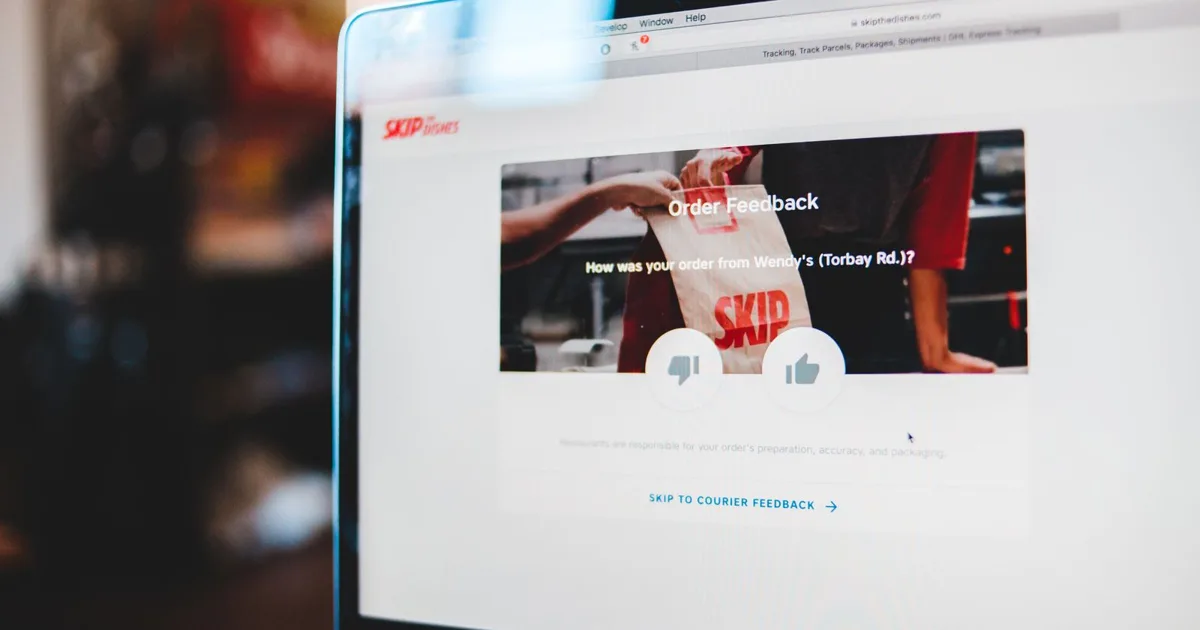
The satisfaction survey is the first, and often most underrated, loyalty tool. It shows the customer that their opinion counts, and it provides concrete data for improving the experience. Short questions sent by text message immediately after a visit see response rates above 30%, according to feedback from our users.
Post-visit SMS marketing
Text messaging is the fastest, most effective channel for staying in touch with local customers. With an open rate above 95%, it is particularly well suited to one-off offers, loyalty reminders and review requests. Our guide on SMS marketing campaigns covers best practices and the optimal sending windows by sector.
For a post-visit review request, a text message sent within 30 to 60 minutes of the visit is the most effective format. Combined with a direct link to your Google profile, it removes all friction.
QR codes in store
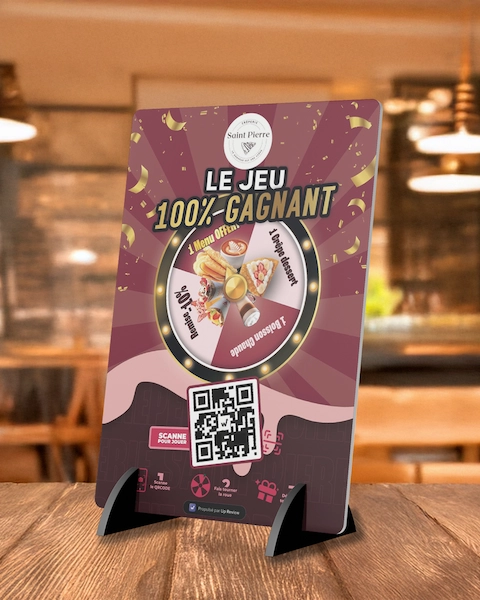
A QR code placed on the table or at the till lets customers leave a review or join your loyalty programme in seconds, with no friction, straight from their smartphone. It is a lightweight structural loyalty tool: it gets customers into the habit of interacting with your brand on every visit.
NFC plates
The NFC plate goes even further by removing the QR code scan altogether. A simple tap of the smartphone is enough to reach your Google profile or your satisfaction form. This format works particularly well in businesses where customers have a few free seconds between finishing their order and leaving.
Prize games
A well-designed prize game generates a spike in engagement and reviews in a short space of time. It creates an event around your brand, strengthens loyal customers' sense of belonging, and attracts new prospects through sharing. It is a complementary tool, effective in bursts, best combined with steady day-to-day collection.
The 5 mistakes to avoid
Even with the best intentions, certain practices reduce the effectiveness of a loyalty strategy or derail it completely.
1. Focusing only on acquisition
The most common mistake is pouring 80% of the marketing budget into attracting new customers, without investing in the relationship with those who are already there. That imbalance is costly in the long run.
2. Promising benefits that are hard to deliver
A loyalty programme that promises unreachable rewards or offers that never materialise destroys trust faster than it builds it. Modest but consistent benefits beat grand promises that never get kept.
3. Neglecting dissatisfied customers
An unhappy customer who gets a fast, constructive response to their problem is often more loyal afterwards than a customer who never had a problem at all. Ignoring dissatisfaction is the surest way to lose a customer for good.
4. Standardising without personalising
Sending the same generic messages to every customer, at the same time, with the same offer, treats each one like a number. Even minimal personalisation makes a measurable difference to open and response rates.
5. Not measuring anything
A loyalty strategy without performance indicators cannot improve. Without measuring retention rate or NPS, there is no way to know whether your actions are having the intended effect.
How to measure the effectiveness of your strategy
Measuring loyalty means quantifying what would otherwise stay invisible. Here are the four essential metrics.
Customer retention rate
This measures the proportion of active customers retained over a given period. It is calculated as follows: (customers at the end of the period minus new customers acquired during the period) / customers at the start of the period, multiplied by 100. A high retention rate means your customers are staying, which translates directly into revenue stability.
Repeat purchase rate
This is the percentage of customers who make at least a second purchase after their first visit. For a restaurant or a local business, it is one of the most telling metrics. A customer who comes back a second time is far more likely to become a regular.
Net Promoter Score
NPS measures how likely your customers are to recommend you, on a scale of 0 to 10. Customers who answer 9 or 10 are active promoters. Those who answer 6 or below are potential detractors. The difference between the two groups is your NPS. A positive NPS is a sign of healthy customer relationships.
Google rating and review volume
For local businesses, your Google rating and review volume are public indicators of loyalty and satisfaction. A rating that steadily improves and a steady stream of recent reviews tell prospects that a business is active, well-liked and trustworthy. Google's algorithm also picks up on this signal for local SEO. Our guide on Google review management explains how to optimise these factors.
Real-world examples of customer loyalty strategies
Concrete examples help show how these principles play out in the real world.
Sephora: the three-tier loyalty card
Sephora's Beauty Insider programme sorts customers into three tiers based on how often they buy. Benefits grow with each tier: discounts, priority access to new products, invitations to exclusive events. This progression mechanic creates a lasting incentive to come back and spend a little more to reach the next level.
Starbucks: the gamified app
The Starbucks mobile app turns every purchase into stars. Customers track their progress in the app and receive personalised offers and surprise bonuses. The gamification keeps customers engaged between visits and reinforces the habit of coming back.
A local restaurant: the loyalty text message
A restaurant owner in Bordeaux uses Up Review to automatically send a text message to every customer 45 minutes after their meal. The message thanks them, invites them to leave a Google review via a direct link, and offers 10% off their next lunchtime visit. Within six months, his number of Google reviews had quadrupled, and his share of regular customers had grown by 18 points.
Nespresso: the club with premium services
Beyond selling capsules, Nespresso has built a whole ecosystem of services: home delivery, capsule recycling, priority machine maintenance, dedicated boutiques. Club membership creates structural loyalty: leaving Nespresso means losing all of these built-in services.
For local businesses, the most effective loyalty still comes down to the basics: being present, responsive, and treating every customer as an individual. An authentic customer testimonial shared across your channels reinforces that message with prospects.
Key takeaways on customer loyalty strategies
An effective customer loyalty strategy is not built in a few weeks. It requires a detailed understanding of your customers, consistent service quality, and regular contact over time.
For local businesses, the priority is clear: automate post-visit review collection, take care over every interaction, and turn satisfaction into active recommendation. This continuous flow is the foundation on which a solid reputation and a loyal customer base are built.
Find our tools to get started on the Up Review pricing page, and our dedicated solutions for restaurants for support tailored to your sector.
Related reading
- How to collect more customer reviews: the complete guide: methods and tools to grow your review volume
- Encouraging customers to leave a review: 8 techniques that work: the psychological and practical levers
- Local SEO 2026: the guide for local businesses: how loyalty fits into your local visibility
- Customer testimonials: complete guide with examples: turning satisfaction into social proof