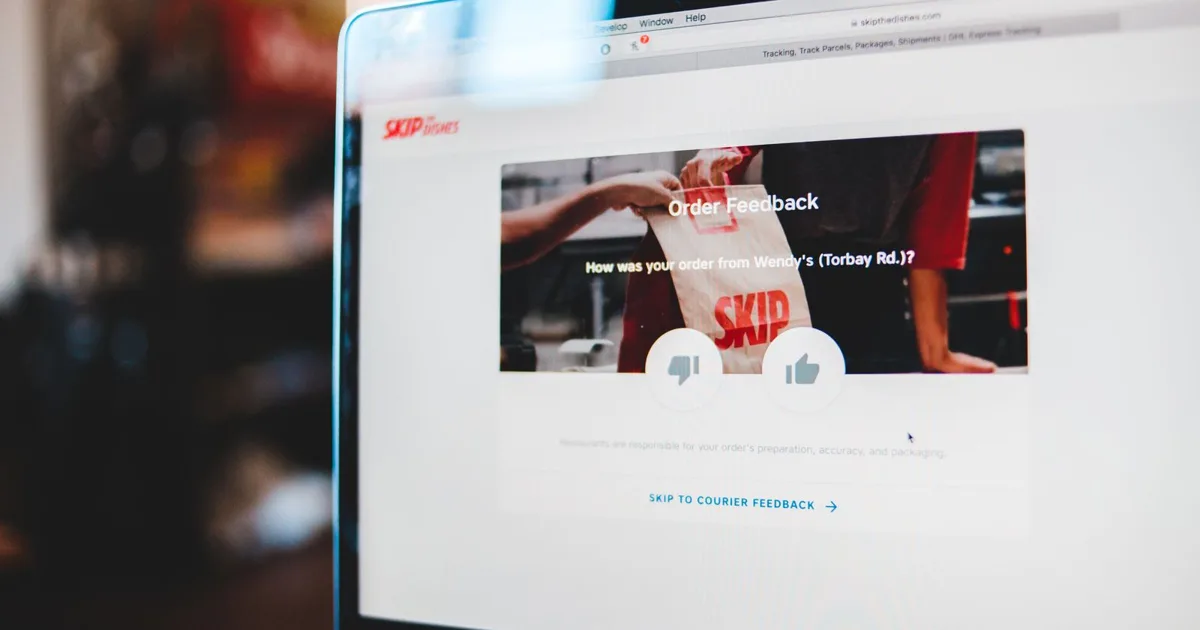
Your customer loved their meal. They leave happy. But if they do not tell anyone, that satisfaction earns you nothing. Customer testimonials turn that silent experience into concrete social proof, seen by hundreds of prospects before they ever walk through your door.
More than 80% of consumers read online reviews before making a purchase (BrightLocal). That single figure sums it up: your future customers read what your current customers say about you, not what you say about yourself.
This guide explains what a customer testimonial is, why it matters strategically, how to collect them effectively, and where to publish them for maximum impact.
What is a customer testimonial?

A customer testimonial is content produced by a real customer, sharing their experience with your brand, product or service. It is not advertising copy written by your team: it is the voice of someone who lived through something and agreed to talk about it.
What sets a testimonial apart from an ordinary review is depth. A review is often just a rating and a sentence. A testimonial tells a story: the initial problem, the solution found, the results achieved. That narrative structure is what makes it credible and memorable.
A testimonial can take several forms:
- A short written quote (2 to 5 signed sentences)
- A face-to-camera video (30 seconds to 3 minutes)
- A detailed review on Google, Trustpilot or another platform
- A full case study with numbers and context
- A spontaneous social media post
Whatever the format, authenticity is what counts. A testimonial with no name, no photo and no context convinces far less than a signed, dated account with real detail. The customer's photo, first name, and job title or city are the details that multiply credibility.
Customer review or testimonial: what is the difference?
Customer reviews and customer testimonials are related, but they do not play the same role in your marketing strategy.
A customer review is usually short, rated from 1 to 5 stars, and published directly on an external platform: Google, Tripadvisor, Trustpilot, Pages Jaunes. You do not control it: the customer leaves it spontaneously or after being asked. Its strength is volume and visibility: 10 well-rated Google reviews can improve your position in local results for months.
A customer testimonial, on the other hand, is more developed. You actively request it, guide how it is written by asking the right questions, and publish it on your own channels: website, brochure, social media, sales presentations. Its strength is depth: it tells a story of transformation, not just a one-off moment of satisfaction.
In a well-built marketing strategy, the two complement each other. Google reviews reassure prospects who find you online. More developed testimonials convince the ones still hesitating on your website or during a sales meeting.
To build your online reputation through reviews, check out our guide to Google review management.
Why customer testimonials are essential
Customer testimonials are no longer just a marketing "nice-to-have": by 2026, your prospects expect them as a given. Here is why they have a direct impact on your results.
Social proof that reassures your prospects
Before buying, everyone looks for confirmation that the risk is low. Customer testimonials play that reassurance role better than any sales pitch.
According to data compiled by BigCommerce, people who read testimonials are 58% more likely to buy. In practical terms, that means having no testimonials on your website could be costing you more than half your conversions.
For a restaurant, a bakery or a neighbourhood shop, this kind of local social proof carries even more weight. When a local resident says "I have been going there for three years and it is just as good every time", that is worth more than a whole page of promotional copy.
A measurable lever for conversion and loyalty
Customer testimonials directly influence your conversion rate: the percentage of visitors or prospects who take action. Adding them to your sales pages or prospecting emails can be the difference between a prospect who leaves and a customer who signs up.
According to Capital One Shopping Research, close to half of customers are willing to pay more for a brand they trust. That trust is built largely through the experiences of your existing customers, not through your own sales pitch.
Loyalty follows naturally from this. A customer whose experience is highlighted in a testimonial feels recognised, and comes back more often.
A strong signal for your online reputation and local SEO
Reviews and testimonials on external platforms like Google directly affect your visibility in search engines. A Google Business Profile with plenty of positive reviews ranks better in the Local Pack, the 3 map-linked results shown at the top of Google for local searches.
Up Review observation: businesses that turn on automatic post-visit review requests get 3 to 5 times more Google reviews per month on average than those relying only on spontaneous reviews.
Across our 400+ clients, McDonald's Pignan is a clear example of what that shift produces: the average rating across its 8 restaurants moved from 2.8 to 3.7 in six weeks once the review request became automatic instead of occasional.
A testimonial collected well today improves your online reputation for the next 12 months.
The 5 types of customer testimonials
Every testimonial format has its own strengths, depending on your goals, your industry and the channel you are using. Here are the five most common types of customer testimonials and how to make the most of them.
1. The short written quote
This is the simplest and most versatile format. A quote of 2 to 5 sentences, signed with the customer's first name, profession or city. It can be used anywhere: homepage, emails, sales presentations, brochures.
Its strength is its simplicity. Its limit: it has to be specific to be convincing. "Great experience" says nothing. "My order arrived within 24 hours, and their team fixed my issue in 10 minutes" says everything. Guide your customers toward this level of detail with the right questions.
2. The video testimonial
Video testimonials capture emotion and body language, two things text simply cannot reproduce. When a customer speaks enthusiastically to camera, it reassures people in a way no written pitch can match.
For a restaurant or a bakery, a 60-second video of a regular customer explaining why they come back every week is more convincing than any advert. And the equipment needed is nothing more than a smartphone and a well-lit spot.
3. The review on an external platform
Google, Trustpilot, Tripadvisor: customer reviews on these platforms are visible to every prospect who searches for you online. You do not control them editorially, which makes them all the more credible in consumers' eyes.
Their SEO impact is direct: the volume and freshness of your Google reviews influence your position in the Local Pack. Systematically encouraging your customers to leave a review is one of the most powerful levers for local SEO.
4. The case study
The case study (or customer success story) is the most elaborate testimonial format. It sets out precise context (who the customer was, what their problem was), the solution put in place, and the measurable results achieved. It is the go-to format in B2B and for any product or service with a long sales cycle.
A good case study contains concrete numbers: "we cut our processing time by 40%" or "revenue grew by 25% in 6 months". These measurable results are what set a case study apart from a simple positive comment.
5. The spontaneous social media post
A spontaneous post from a customer on Instagram, LinkedIn or Facebook speaking positively about your business is an authentic, high-value testimonial. You did not ask for it, which makes it even more credible.
This kind of content can be reshared on your own channels with the customer's permission, or used as a trigger to ask them for a more structured testimonial. A customer who posts spontaneously is usually happy to go further if you make it easy for them.
How to collect customer testimonials in 4 steps
Collecting testimonials is not something you leave to chance. It follows a simple process that, once set up, runs almost on its own.
Step 1: choose the right moment
The best time to ask for a testimonial is right after the moment of satisfaction: at the end of a great meal, after an order is delivered, the moment a customer expresses how happy they are. Asking immediately gets a response rate 2 to 3 times higher than a request sent weeks later.
For a local business, the post-purchase window (within 30 to 60 minutes) is ideal. For a B2B service, the end of a project or a successful rollout is the natural moment.
Step 2: phrase the request
The request should be short, personalised, and explain how the customer's feedback helps other people. Do not ask "leave us a review": ask "your experience helps other [restaurant owners, customers, tradespeople] make their choice".
A text message sent after checkout, an automatic email after delivery, or a QR code placed on the table: each channel works depending on the context. SMS marketing campaigns are often the most effective option for local businesses, with an open rate above 95%.
Step 3: ask the right questions
A customer you ask "what did you think of our service?" will answer vaguely. A customer you ask "what problem were you dealing with before you found us, and how did we solve it?" will answer with precision.
The right questions steer the testimonial toward what is actually useful for your future prospects. The next section sets out exactly which questions to use depending on your goal.
Step 4: automate collection
Asking manually, one customer at a time, does not scale. With the right tool, every customer visit automatically triggers a review or testimonial request at the right moment, on the right channel, with no manual work involved.
The Up Review platform fully automates this flow: an SMS or QR code sent after every interaction, feedback centralised in one place, and positive reviews routed straight to your Google Business Profile. An NFC plate lets customers leave a review with a single tap of their phone.
For a complete guide to collecting reviews, see our Google review management page.
The right questions to ask your customers
The quality of a testimonial depends directly on the questions you ask. Here are the questions that produce the most useful answers, organised by goal.
To bring out the customer's context and challenges:
- What was your situation before you came to us?
- What specific problem were you trying to solve?
- Why did you choose our product or service over another option?
To highlight the results achieved:
- What surprised or satisfied you the most about our service?
- What concrete results have you seen since?
- What has changed in your day-to-day life or business?
To steer toward recommendation and loyalty:
- What would you say to someone who is on the fence about contacting us?
- How is our service different from what you have tried elsewhere?
An answer that covers these questions will naturally contain the three elements of a good testimonial: context, solution, results. Always add a photo of the customer (with their permission), their first name, and their job title or city. These human details multiply how credible the testimonial feels to other potential customers.
Where to publish testimonials on your website and channels
Collecting authentic testimonials is not enough on its own: you need to place them at the right points in the customer journey, exactly where your prospects need reassurance most.
On your website:
- Homepage: 2 to 3 short quotes visible without scrolling
- Service or product pages: a testimonial directly tied to the service described
- Contact or quote-request page: the last point of friction before the decision
- A dedicated "Testimonials" page to bring together your most developed feedback
In your digital communication strategy:
- Social media posts (LinkedIn, Instagram, Facebook): one quote a week is enough to keep social proof visible
- Prospecting and nurturing emails: include a testimonial relevant to the topic at hand
- Email signatures: rotate quotes so your contacts see a variety of feedback
- Sales materials: a ready-to-use testimonial PDF kit for your sales team
On online review platforms:
Google reviews are the most strategic channel for a local business. They show up in search results, on Google Maps and in the Local Pack. A steady stream of positive reviews improves your ranking for local searches like "restaurant near [neighbourhood]" or "artisan bakery near me".
A Google review prize game is an effective complementary method for generating a spike of new reviews in a short time. For everyday automatic post-visit collection, see our Google review management page.
The 6 mistakes to avoid with customer testimonials
Even well-intentioned, certain practices can reduce the impact of your testimonials or damage your credibility.
1. Publishing only perfect testimonials
A wall of unqualified 5-star ratings looks staged. Prospects trust a mix of feedback more, including a few constructive criticisms alongside your replies. Transparency builds more trust than apparent perfection.
2. Not asking satisfied customers
Most satisfied customers will not leave feedback on their own: 77% of customers leave a review only when asked directly (BrightLocal). If you do not automate the request, your online image ends up overrepresenting the small share of customers, often unhappy ones, who speak up unprompted.
3. Inventing or editing testimonials
A fake testimonial destroys trust the moment a prospect discovers it, and can expose you to legal penalties. Guide the writing with precise questions, get sign-off from the customer, but never change the substance.
4. Forgetting to ask permission to publish
Before publishing a customer's name, photo or video, get their explicit permission, ideally in writing. It is a matter of respect, and in many places (including under GDPR rules in the EU) it is a legal requirement too.
5. Waiting too long
A customer asked within the hour of their purchase or visit will write a far more specific, enthusiastic testimonial than one contacted 3 months later. Timing is decisive for the quality of the feedback you get.
6. Not measuring return on investment
A testimonial with no follow-up is just another piece of content. Track your Google rating over time, the click-through rate on pages that feature your testimonials, and your conversion rate before and after they go live. A well-run testimonial strategy often delivers a stronger return than comparable marketing efforts.
Conclusion: what to remember about customer testimonials
A customer testimonial is one of the few pieces of marketing proof you do not manufacture yourself. That is precisely what makes it so powerful. Your future customers trust your current customers more than they trust your sales pitch.
The good news: collecting customer testimonials no longer takes weeks of work. With the right process and the right tools, every moment of customer satisfaction automatically turns into social proof, published in the right place, at the right time.
For local businesses, the most direct lever remains your Google Business Profile. Every review you collect improves your local visibility and brings in new customers. Check out our campaign examples in our bulk SMS marketing guide to see how to combine testimonials and local marketing into one coherent flow.
Going further
- Google review management: centralise collection, automate requests and track your online reputation
- The best tools to boost your Google reviews in 2026: a comparison of review collection solutions
- Customer loyalty strategy: the complete guide: how testimonials fit into a lasting customer strategy
- Bulk SMS marketing: 2026 guide for business owners: the most effective channel for requesting post-visit reviews