![How to succeed at restaurant advertising [2026 Guide]](/images/blog/cover-comment-reussir-publicite-restaurant-guide.webp)
Running a restaurant already means juggling a thousand things a day… and on top of that, you're supposed to "do some advertising".
The good news: restaurant advertising is not reserved for big chains. With a simple, structured approach, an independent restaurant can also boost its visibility and attract more customers.
In this article, we will look concretely at how to advertise your restaurant:
What types of advertising work for restaurants?
How do you use them?
How do you attract new customers?
How do you measure the return on these ads?
Why advertising has become essential for restaurants
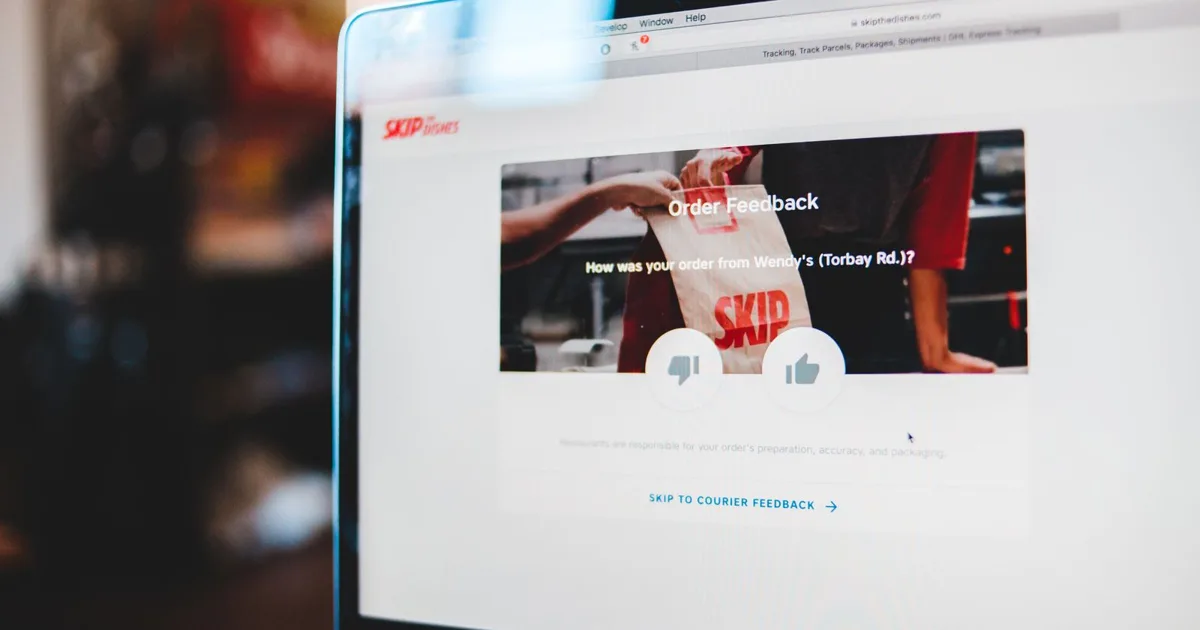
76% of people who search on their smartphone for a product near their location visit a business that same day (source: Think With Google).
The restaurant industry is fiercely competitive. On the very same street, one restaurant can be packed… while the one next door sits nearly empty.
The difference does not always come down to the food. It often comes down to your restaurant's visibility and how well you know how to attract customers.
Today, your potential customers search "restaurant + city" on search engines and look at photos and reviews before they even read the menu. They follow food accounts on Instagram, influencers, guides, and receive offers and promotions by email or online advertising.
👉 Without an advertising strategy for your restaurant, you leave the field wide open for your competitors.
But with one, you can introduce your restaurant to potential customers who would never have found you otherwise, or, for example, remind your existing customers that you are still there (and that they should come back).
With a well-oiled strategy, you can steadily grow your revenue without lowering your prices. Advertising should be seen as an investment, not as an "extra" expense.
Understanding the intent behind your restaurant's advertising
Before launching any ad campaign, ask yourself a simple question:
"Why am I actually running this ad?"
A few classic intentions:
Building awareness for your restaurant (opening, rebrand, new chef)
Filling quiet slots (weekday lunch, early service, Sunday evening)
Highlighting offers (special menu, themed evening, new burger)
Promoting a channel (online booking, takeaway, delivery).
Your type of advertising will not be the same if you just want a presence on Google versus launching a big event.
Without a clear goal, even the best restaurant advertising can fall flat: you will have spent money without knowing what you were trying to achieve.
Types of advertising for restaurants
There are many ways to advertise. To keep things simple, they can be grouped into two broad families: online advertising and offline advertising.
Online advertising: the heart of your visibility
It is 2026! Online advertising is essential, even for a small restaurant. It covers:
search engine advertising campaigns (paid search, Google Ads)
social media advertising (Facebook, Instagram, TikTok, YouTube);
ads on delivery or booking platforms;
well-targeted email or SMS campaigns.
This type of restaurant advertising is appealing because you can target a precise area around your venue, tailor your ads to your target audience (age, interests, timing) and track the cost of every click and the return on investment.
A restaurant could, for example, launch a local Google campaign around the keyword "burger + [neighbourhood]", or "fine dining restaurant + [city]" to reach people actively searching for a restaurant.
Offline advertising: the real world still exists
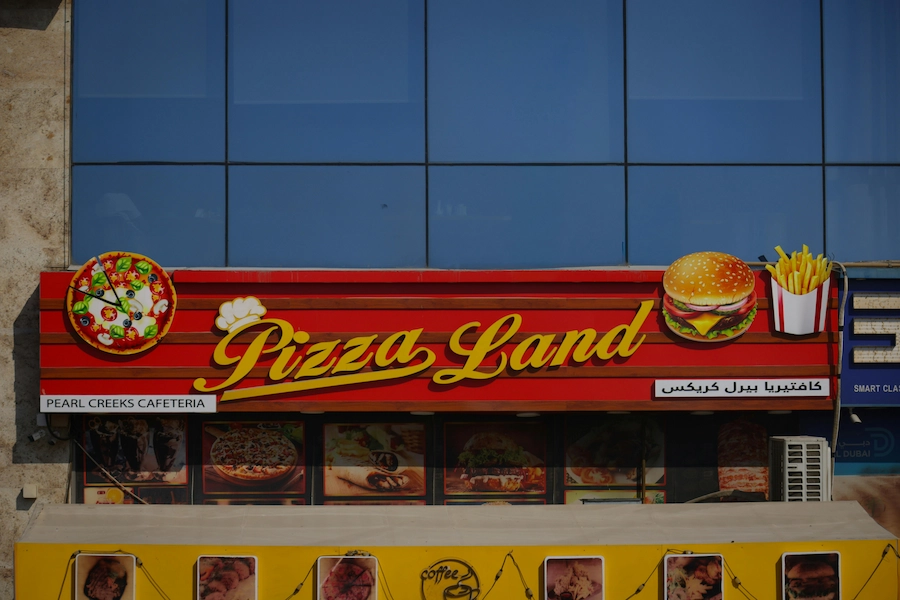
Even in the age of Instagram, offline advertising is still very effective for restaurants:
posters outside your venue
flyers in mailboxes
partnerships with nearby businesses, tourist offices, hotels
advertising displays in car parks, shopping centres, gyms
in-person events (tasting evening, concert, special menu).
This type of restaurant advertising works well alongside digital!
👉 People see you on the street, then search for you afterwards on search engines to check your reviews, address, menu and whether you take bookings.
Building an advertising strategy for a restaurant
Effective advertising does not start with "what budget should I set?" but with "who am I talking to, and for what purpose?".
Defining your target audience and your goals
Before thinking about formats or ad platforms, you first need a bit of marketing groundwork. Yes, that is where it starts, so clarify:
Your audience: local residents, tourists, families, meat lovers, students, business clientele…
Your goals: attract new customers, bring back regulars, launch a new concept, fill a terrace, promote a fine-dining service, etc.
To set a goal, use the SMART method :
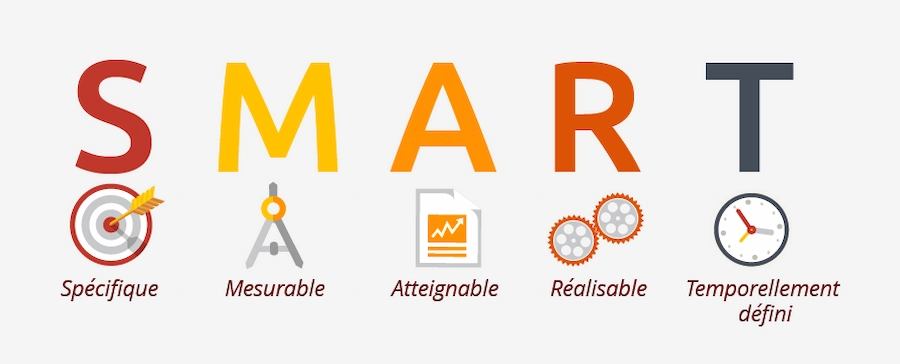
S (Specific): the goal must be clear and precise, with no ambiguity.
M (Measurable): it must be possible to put a number on it or assess it (number of customers, bookings, revenue, etc.).
A (Achievable): the goal must be realistic given your resources and situation.
R (Relevant): it must have a real impact on your restaurant and align with your priorities.
T (Time-bound): the goal must be set within a timeframe, with a clear deadline.
Example goals for your restaurant:
"Attract 30 new lunch customers over the next 3 months";
"Increase evening online bookings by 20%";
"Promote a burger + drink menu offer on weekdays".
Once these goals are set, all your restaurant advertising strategies become much easier to choose, especially when it comes to picking your channels, and that is exactly where we are headed ;)
Choosing the right channels for your ad campaign
GOAL #1 = BUILD AWARENESS FOR A NEW RESTAURANT
Geo-targeted advertising on Google and Facebook => Set up campaigns targeted around your catchment area
Launch campaign => Promotional actions dedicated to the opening (special offer, event, prize game)
Local relations => Build partnerships and local communication channels (nearby businesses, local influencers, local media)
GOAL #2 = QUICKLY FILL A DINING ROOM FOR ONE EVENING
Instagram Stories => Short-lived posts to promote a time-limited offer = a sense of urgency.
Sponsored posts => Locally targeted sponsored content
Emailing your entire contact list => Send a direct message to your base about an evening or a promotion, for example
Bulk SMS => The most responsive channel for generating quick bookings over a short period.
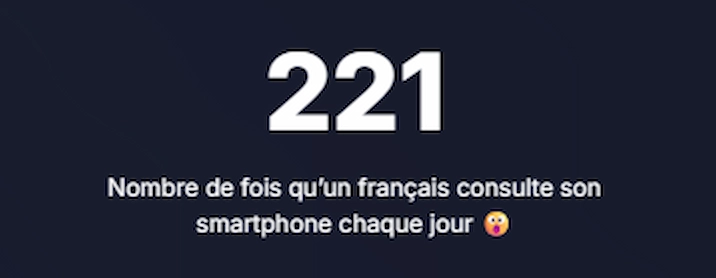
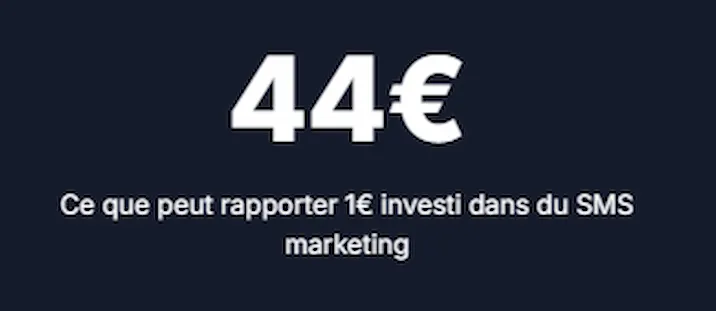
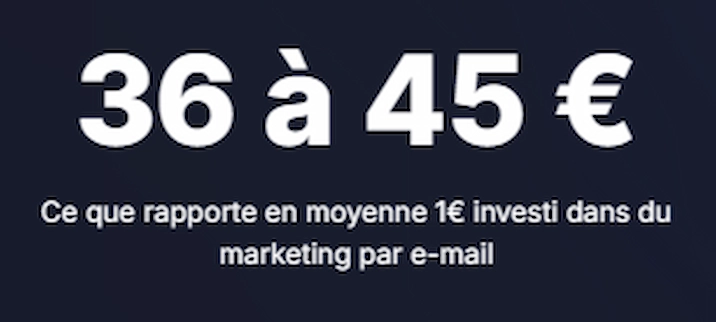
A great example is Mas du Cheval, which used Up Review to fill its entire venue across three evenings and gain more than 500 new subscribers.
90% of text messages are read within 3 minutes of being received (source: EZ Texting)
So, ready to get started right now?
👉 Start your SMS and email campaigns with Up Review.
GOAL #3 = PROMOTE A FINE-DINING MENU OR A TASTING EVENING
Social media advertising
"Foodie" targeting on your campaigns
Collaborations and partnerships with influencers
You do not have to do everything!
Two or three channels used well beat ten scattered actions that are not aligned with your goals and your audience.
More views do not mean more conversions or more visits to your restaurant: only precise targeting lets you attract the most qualified people.
Online advertising strategies that work for restaurants
Most customers go through digital channels today. Good online advertising can become your best advertising, ahead of any flyer.
Having a clear, conversion-focused website
Having a restaurant website is no longer a luxury. It is the baseline.
Your website should:
1) Answer the question "who are we?" within seconds
Either through a dedicated page, or directly on the most important page of your site: the homepage.
Visitors should immediately understand the restaurant's style, your "promise", what people eat there, and the image you want to project (traditional, rustic, fine dining, modern, etc.).
2) Clearly display the address, opening hours, phone number and booking option
This is extremely important for improving navigation and letting visitors immediately understand where you are. Ideally, they should be able to click directly on your address or on a directions button to get on the road to your restaurant. Everything should be simple, accessible and intuitive.
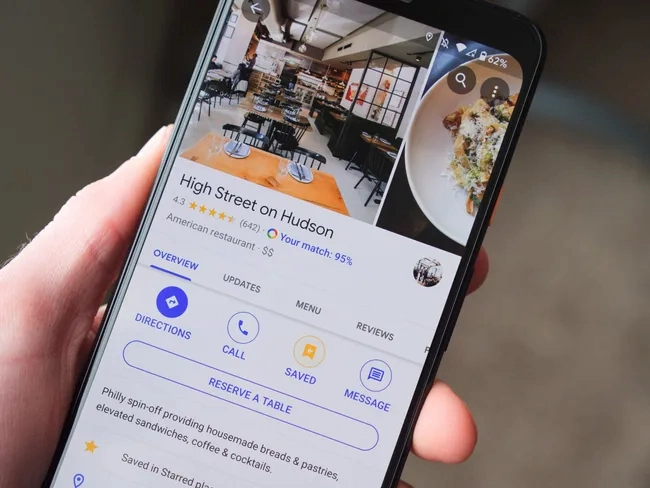
This local information also plays a key role in your restaurant's local SEO: displaying it clearly on your site helps you rank better on Google Maps and in local search results.
3) Showcase your flagship offers: lunch menu, evening menu, specialities, signature burger, fine-dining meal, etc
You can do this directly on your website, but also through external tools like Linktree or dedicated mini-sites. These can be shared on your social media so people can easily reach your menus from different platforms.
4) Be optimised for search engines
Improve your local SEO by creating a dedicated page on your site around a query your potential customers might type. Imagine a customer searching "restaurant + your city": you want to show up for that search, right?
To do this, create a dedicated page around that main keyword, or bring in a local SEO professional. This page helps round out your visibility on Google Maps and improve your overall ranking in local search results, in a lasting and effective way.
A well-designed website amplifies every one of your restaurant's ads: every campaign you run on Google, Facebook or Instagram eventually sends people… somewhere. If they land on an empty or poorly built site, you lose that traffic.
Organic and paid search: SEO + SEA
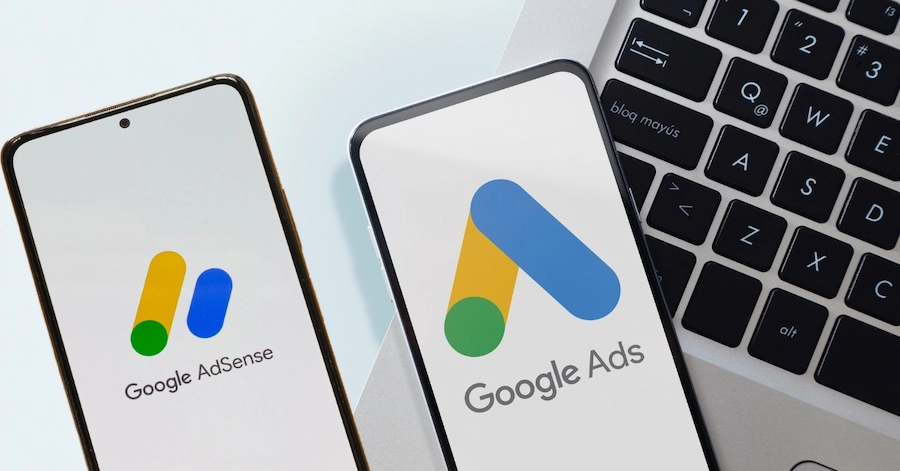
To introduce your restaurant to customers who do not know you yet, you can combine:
Organic search (SEO): content on your site, blogs, local pages
Paid search (SEA): paid advertising on Google Ads.
Paid search lets you:
appear at the top of the page for a key query (for example "Italian restaurant + [city]");
pay per click, giving you control over your budget;
target people close to your venue or a specific audience (for example: foodies).
The idea is not to pit SEO against SEA, but to use them together: SEO builds a lasting foundation, with free traffic over the long run; paid advertising is highly effective immediately, but stops the moment the budget runs out.
Social media advertising: attracting customers where they are already looking
When people talk about restaurant advertising examples, they immediately think of visual communication: photos, videos, stories.
Instagram, TikTok, Facebook: the food showcases
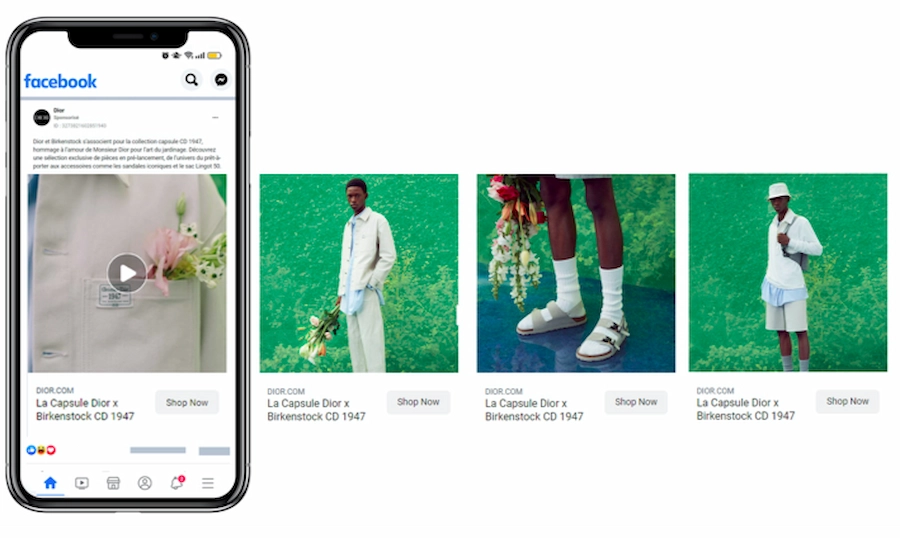
Social media is an ideal playground for restaurant advertising:
Instagram for beautiful photos, stories, Reels
TikTok for short videos, behind-the-scenes clips, recipes, atmosphere
Facebook for reaching a wider audience and sharing events
Effective social media advertising should:
show the reality of your restaurant: dishes, dining room, team or friendly atmosphere
tell a mini-story rather than just posting "-20% tonight";
invite a clear action: book, call, discover a menu, join an event.
For example, you could: promote a new dish or a special offer, launch a prize game to attract more customers to your restaurant, or highlight restaurant events: concert, themed evening, special menu.
Offline advertising ideas for restaurants to attract customers
The offline world remains a powerful channel for restaurants. A few simple advertising ideas can change the game.
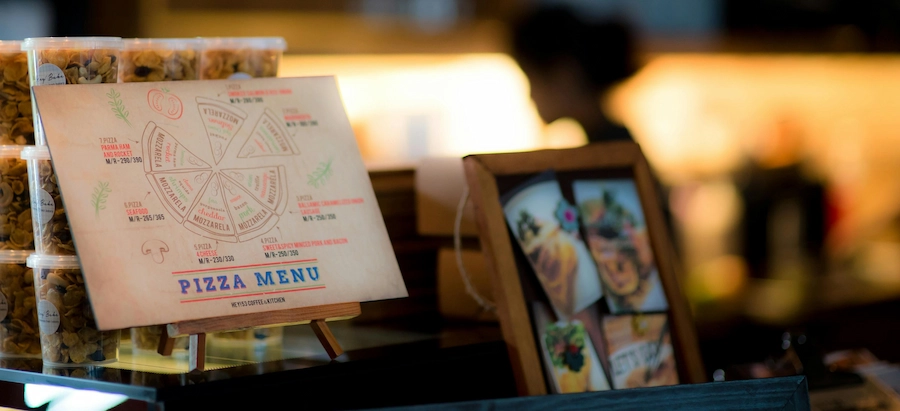
Posters, sandwich boards and outdoor advertising
Outside a restaurant, a good poster can make the difference between a customer who walks past… and a customer who walks in.
You can use:
- A sandwich board detailing your dish of the day, paired with a catchy line and a clear, attractive offer.
Tip: A bit of humour can create a real hook effect, catch passers-by's eyes and anchor your message in their minds.
- Fine-dining posters inside, showcasing your specialities, your menu and your values. It is worth adding details about what you offer to help guide customers' choices, open up the range of options and stop them leaving without discovering everything.
These materials can also make people want to order more or come back to try a speciality they noticed. They can also announce an upcoming event or offer (a free dish next week, -10% off the menu, etc.), acting as an effective reminder (do not overlook this).
- Outdoor advertising in car parks or nearby high-traffic spots, especially useful if your storefront is not very visible.
Classic but still effective, this type of display boosts your offline visibility and helps passers-by understand that your restaurant is close by. Indicating the distance to travel or offering clear directions, in the style of "McDonald's 500 metres" signs, makes it easier for people to act.
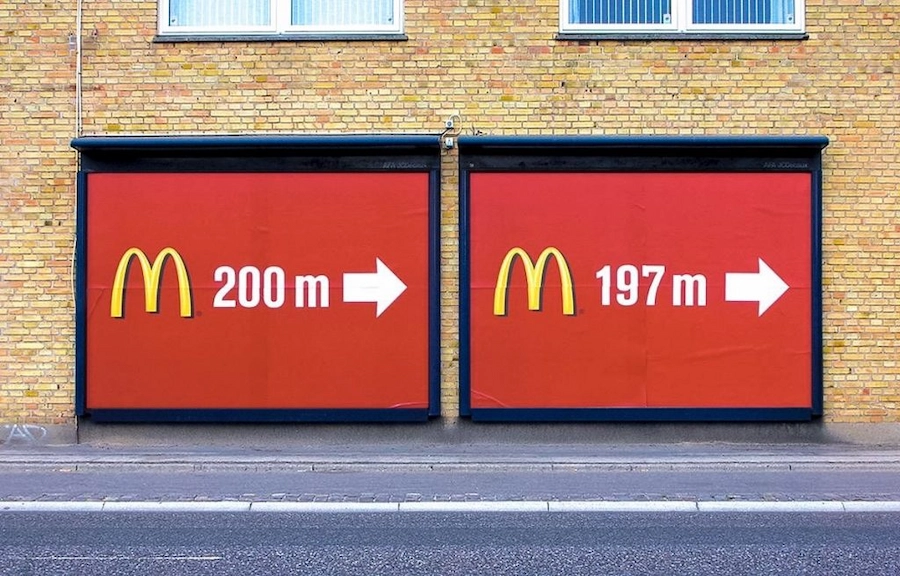
The goal is to attract customers walking down the street and give them a reason to stop!
Real-world examples of successful restaurant advertising
Big chains often provide good examples of restaurant advertising. Even if your budget is not the same, you can draw inspiration from their strategy above all.
The art of storytelling: Burger King, Denny's, Legal Sea Foods
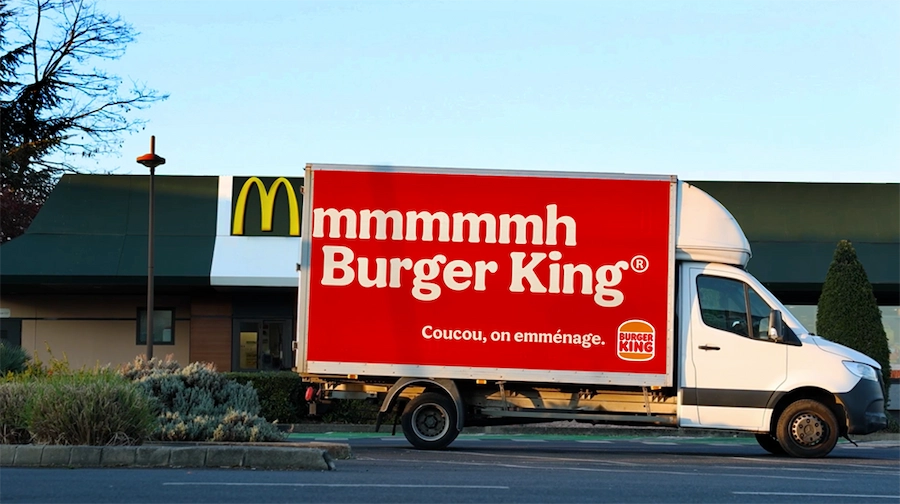
Brands like Burger King, Denny's and Legal Sea Foods have understood one thing: restaurant ads that stick in people's minds tell a story!
They use:
Humour (Burger King and its offbeat campaigns, like in the image)
A highly recognisable tone on social media (like Denny's)
One strong idea explained in a few words
You do not have to copy their style, but you should copy their strategy and apply it to your own style and goals: effective advertising is not just "come eat with us", it is a message that sounds like you, repeated consistently.
Advertising strategy examples for independent restaurants
Among independent restaurants, storytelling-inspired strategies often deliver very concrete results, even on small budgets.
For example, SMS campaigns get excellent results for independents. A simple message sent to a customer base can generate a 10 to 25% response rate, especially for events like Valentine's Day or Mother's Day.
👉 For an equivalent budget, these campaigns are often far more cost-effective than broad, untargeted advertising.
Another example: a neighbourhood restaurant that tells its story and highlights its home cooking through a local Instagram campaign can see a 20 to 40% rise in footfall for a specific service.
Finally, restaurants that combine local advertising with review collection see a genuine leverage effect. An ad campaign that drives traffic to a well-rated, active Google, TripAdvisor or other review profile can significantly increase bookings.
87% of consumers read Google reviews before choosing a local business (source: BrightLocal, Local Consumer Review Survey)
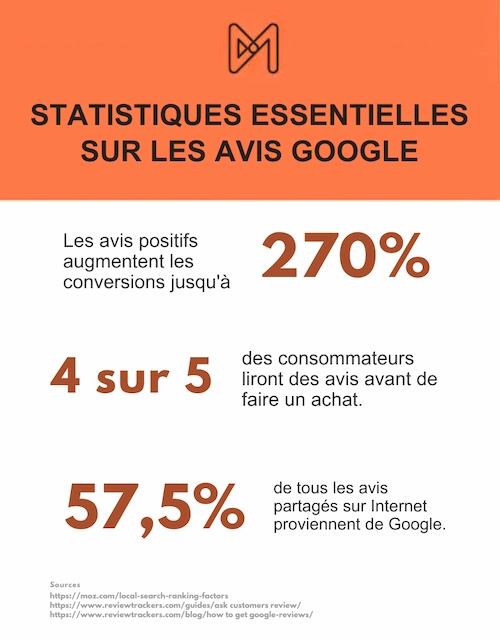
👉 Advertising grabs attention, reviews trigger the decision.
This is exactly where Up Review comes in. The platform helps restaurant owners get more customer reviews in a fun, automated way (Google, TripAdvisor, etc.), while making it easy to respond to reviews in the best possible way.
This helps positively influence future customers and drive more visits to your restaurant.
How do you measure the impact of your advertising efforts?
Advertising is good. Knowing whether it works is better.
For every ad campaign, try to track these data points or metrics as closely as possible:
1) The number of bookings or orders generated by the ad
2) Customer acquisition cost (CAC): how much you spend on advertising to win one new customer
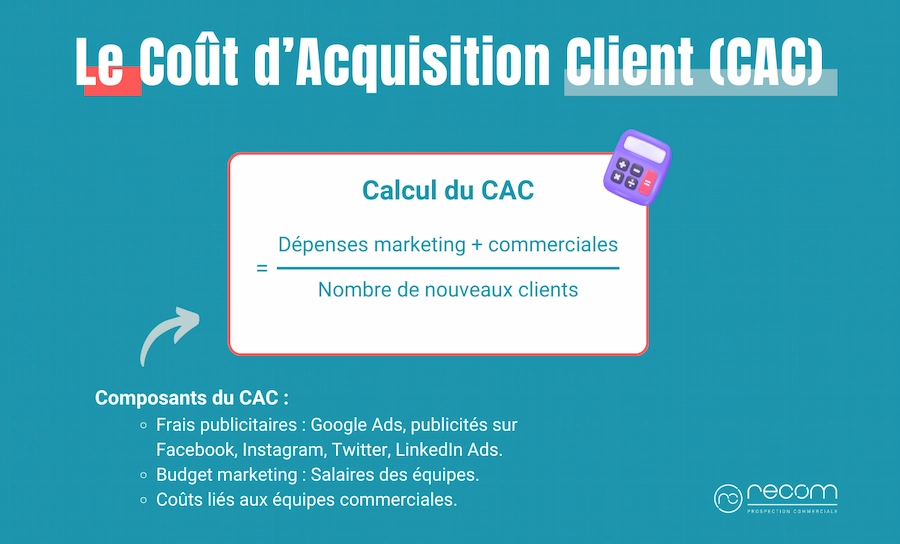
👉 This is the single most important point: it directly answers the question "is my advertising profitable?"
3) How your reviews and online visibility evolve
Advertising often redirects to your Google Business Profile, but the reviews still need to do their job: are they growing in number, quality and credibility? This needs to be tracked over time.
Simple calculation example for an ad campaign:
You spend 200 euros on advertising for your restaurant over one month.
This campaign generates 40 new customers.
Your acquisition cost is therefore 5 euros per customer.
If a customer spends 25 euros on average, comes back several times and leaves a positive review, this restaurant advertising becomes an excellent investment, both profitable and lasting. Accurate tracking requires the right tools: restaurant management software centralises bookings, till data and customer information.
How Up Review helps restaurants boost their Google reviews
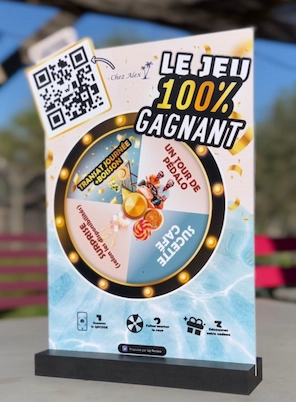
The customer scans a QR code placed on your table, counter, window, etc.
They access a fun experience (prize game, reward wheel or simple action).
The customer posts their review or subscribes (depending on the chosen action).
Up Review centralises all your Google reviews in a single interface.
Review replies are automated with AI, or personalised by you.
The data collected can then be used to launch SMS or email campaigns.
👉 Result: more reviews, more replies, better local rankings, a stronger online reputation, more visibility and more customers.
At Up Review, on our 3 Quick restaurants in Avignon and Nimes, this exact setup took the average rating from 2.3 to 4 stars, a shift that changed how those campaigns converted.
68% of consumers say they will only use a business with an average rating of 4 stars or higher (source: BrightLocal, Local Consumer Review Survey)
‼️ Discover our prize wheel games to boost Google reviews‼️
Conclusion: restaurant advertising, a profitable lever when it is well structured
Restaurant advertising is not about being visible everywhere, but about being visible in the right place, at the right time, and in front of the right people. With clear goals, a few well-chosen channels and consistent messaging, an independent restaurant can attract more customers without blowing its budget.
Combined with a strong digital presence, a clear website and, above all, solid customer reviews, advertising becomes a genuine driver of footfall and revenue. Advertising attracts, reviews reassure, and tools like Up Review turn that visibility into real, lasting visits.
👉 In short: structure your actions, measure your results, and make every satisfied customer your best advertising.
FAQ: Everything you need to know about restaurant advertising
What are the 3 main types of advertising used by restaurants?
They can be simplified into three broad families:
online advertising (Google Ads, social media, delivery platforms),
offline advertising (outdoor displays, flyers, local partnerships),
relational advertising (online reviews, word of mouth, user-generated content). A restaurant can combine all three types of advertising to reach different audiences.
What is the rule of 7 in advertising?
The rule of 7 in advertising says a customer needs to see a message several times (often around seven) before taking action.
For a restaurant, that means someone might see your name on Google, on a poster, on Instagram, in the reviews… before booking. Hence the importance of repeating the same key message across all your restaurant's advertising.
How do you attract customers to a restaurant?
To attract customers to a restaurant, you first need to be visible where they are looking: Google, social media, the street, recommendations. Next, your restaurant advertising needs to clearly answer the question: "Why come to you rather than somewhere else?".
Highlight your atmosphere, your food, your offers, and make booking easy. Effective advertising is what makes people want to try you, and is then confirmed by positive reviews.
How do you attract new customers with targeted advertising?
Targeted advertising lets you reach the right people at the right time: by geographic area, by interest (fine dining, burgers, Italian food), by age, by behaviour (people who already visited your website).
By combining the right message with good targeting, you can attract new customers on a limited budget while keeping a strong return on investment.
How do you advertise on Facebook for your restaurant?
On Facebook, start with a fully filled-out page: photos, menu, opening hours, link to your website. Post simple content regularly: dish of the day, team, behind-the-scenes, events.
To run ads, use Ads Manager to create a local ad campaign: define a small area around your venue, a target audience (age, interests) and a clear goal (clicks to the site, bookings, messages). Even a modest budget can already bring customers to your restaurant.
How do advertising platforms work for restaurants?
Advertising platforms (Google Ads, Meta Ads, TikTok Ads…) show your ads to an audience defined by your settings: keywords, location, interests. You typically pay per click or per impression.
For a restaurant, the key is to clearly define your keywords (for example "restaurant + city"), your geographic area, and to link the ad to a clear page (website, Google profile, booking system). Every euro spent should come with at least some tracking to assess the cost per customer.
Running a restaurant and want to attract new customers?
If you run a restaurant and want to attract new customers, start small: update your Google profile, work on your reviews, build a simple website, post regularly on social media.
Then add targeted restaurant advertising, even on a limited budget. What matters is building a consistent presence that makes people want to try you, and gradually letting your customers become your best ambassadors.